


Ever thought if your current setup can keep up with the fast-growing demand for drinks? The market for ready-to-drink options is booming. Many facility managers face a challenge: their small-scale setups can’t meet the demand.
Transitioning to a more efficient model is now a must for success. It’s not just a choice anymore.
By scaling beverage production lines with rtd concentrate production, you can move from small batches to large-scale production. This method uses standardized liquid bases for consistent quality in every bottle. You’ll see how these changes make your facility more efficient and reliable.
Key Takeaways
- Identify the critical transition points from pilot testing to full-scale manufacturing.
- Learn how standardized liquid bases improve product consistency and flavor profiles.
- Discover strategies to meet rising consumer demand without sacrificing quality.
- Understand the economic benefits of shifting your current operational workflow.
- Master the essential steps to optimize your facility for high-volume output.
Assessing Your Current Beverage Production Bottlenecks
To grow your RTD beverage production, start by looking at your current setup. You might find that you can’t keep up with demand, even though you’re making more. This is often because your old ways were made for smaller batches, not big production.
Identifying inefficiencies in whole-fruit processing
Working with raw fruit is very time-consuming. You spend a lot of time washing, peeling, and cutting it. This slows you down and makes your flavors uneven because fruit quality changes with the seasons.
Using whole fruit also means you throw away a lot of it, which costs a lot. Streamlining your input process is key to fixing these problems. By using concentrates instead of raw fruit, you save time and space.
The hidden costs of manual ingredient handling
Manual mixing is a big problem when you want to grow. As you make more, the chance of recipe drift increases. Even the best workers can’t always mix the same way every time.
This leads to flavors that aren’t the same every time, which can upset customers and hurt your reputation. Plus, the cost of paying people to mix by hand adds up fast. You could use that money for better things, like checking the quality of your drinks.
Evaluating throughput limitations in your facility
To move forward, find out where your line slows down. Are your pumps too slow for your bottling speed? Do your mixing tanks hold you back from running continuously?
To scale up your beverage production lines with RTD concentrates, see your whole facility as a unified system. If one part is slower than the others, you’re wasting money on idle equipment. By finding these spots, you can decide where to add automation and improve your flow.
The Strategic Shift to Scaling Beverage Production Lines with RTD Concentrates
Scaling up your beverage production lines with RTD concentrates is a big change. It’s not just about getting new equipment. It’s about changing how you make your drinks.
By using RTD concentrates, you can make more drinks with less effort. Your factory can handle more work with better accuracy.
Understanding the mechanics of liquid beverage bases
Liquid beverage bases are the key to your drinks. They are made to give perfect consistency every time.
Unlike old methods, these bases have a steady chemical makeup. This makes them perfect for fast, automated production.
“Efficiency is doing things right; effectiveness is doing the right things.”
Why industry leaders are moving toward pre-clarified systems
Top companies are switching to pre-clarified systems. This move gets rid of the messiness of whole fruit. It means less chance of clogs and less downtime.
Using pre-clarified inputs means your machines run smoothly. Your team can focus on making great drinks, not fixing problems.
Defining the scalability potential of concentrated processing
Concentrated processing opens up new possibilities for making drinks. It takes up less space and uses less energy. This lets you use your space better.
This efficiency helps you grow fast as demand increases. By standardizing your ingredients, you can easily try new flavors. You won’t have to change your whole setup.
Transitioning from Raw Fruit to RDM International Bulk Liquid Bases
Switching to RDM International bulk liquid bases can transform your production floor. It moves you away from the mess and waste of raw fruit handling. Choosing standardized liquid solutions sets your facility up for growth and excellence.
Eliminating the mess of traditional fruit sorting
Fruit sorting often causes downtime due to debris and spoilage. RDM International products eliminate these issues from your rtd concentrate production line. Your team will focus more on tasks that grow your business.
“Efficiency in the modern beverage industry is not just about speed; it is about removing the unnecessary friction that slows down your daily output.”
Streamlining your supply chain with standardized inputs
Raw fruit management is a constant challenge due to quality and supply issues. RDM International bulk bases offer consistent, high-quality ingredients ready for use. This standardization is key to a reliable rtd beverage manufacturing supply chain.
The table below shows the benefits of using RDM International bulk bases:
| Feature | Raw Fruit Processing | RDM Bulk Liquid Bases |
|---|---|---|
| Preparation Time | High (Sorting/Cleaning) | Minimal (Ready to Pump) |
| Waste Management | Significant (Peels/Pulp) | Near Zero |
| Consistency | Variable by Season | Exact Batch-to-Batch |
| Storage Needs | High (Cold/Perishable) | Optimized (Ambient/Stable) |
Preparing your facility for a cleaner production environment
A cleaner facility is more productive. Adopting liquid bases quickly achieves this. It reduces the sanitation work for your maintenance team.
This change is crucial for scaling your rtd beverage manufacturing while keeping quality high. It modernizes your rtd concentrate production workflow. RDM International helps you succeed in a competitive market.
Implementing Precision Syrup Pump Systems
Modernizing your facility starts with the right syrup pump systems. When you switch to RDM International bulk liquid bases, your equipment needs to be precise. This step is key to successful rtd concentrate production.
The role of automated dosing in batch consistency
Automated dosing is the core of your mixing process. It removes the chance of human error, which can cause flavor inconsistencies. Consistency is the key to brand loyalty, and automation ensures every bottle is perfect.
With automation, scaling production becomes easier without batch variations. This reliability lets your team focus on quality control, not manual tasks. Precision dosing is the base for your operation’s success.
Selecting the right pumping hardware for your viscosity needs
Liquids vary, so your pump must match your base’s viscosity. High-viscosity concentrates need strong pumps for steady flow. Look for pumps with precise control over output volume.
For top accuracy, add advanced measurement tools. You might need:
- Coriolis meters for precise mass flow.
- Mag meters for conductive liquids.
- Load cells for real-time batch weight monitoring.
Integrating RDM International bases into existing lines
You don’t have to overhaul your facility to see improvements. RDM International bases fit easily into your setup with little downtime. By optimizing rtd beverage production with targeted upgrades, you boost efficiency.
First, check your piping and connections for compatibility with high-concentration liquids. Our team can guide you to ensure your pumps match your bottling speeds. Seamless integration quickly boosts your profits while keeping customer expectations high.
Achieving Exact Batch-to-Batch Consistency
Transform your production floor by using automated systems instead of raw fruit. This change helps you avoid the mess of sorting whole fruits. It also lets you use precise syrup pumps for exact batch-to-batch consistency.
This is key for any facility wanting to grow while keeping quality high.
Standardizing flavor profiles across every production run
Raw ingredients can vary in ripeness and sugar content, affecting flavor. Switching to a standardized liquid base gives you complete control over taste. This ensures your customers always get a great taste.
Reducing human error in formulation and mixing
Manual handling can lead to mistakes or contamination. Automated dosing systems eliminate these risks. By using a reliable rtd concentrate formulation, your team can focus on monitoring, not adjusting ratios.
This reduces the chance of costly errors.
Quality control protocols for concentrated beverage processing
Even with automation, strict quality control is crucial. Small changes in flow rates can cause big problems. Regular calibration checks on your pumps are essential to keep your concentrated beverage processing within tight limits.
Having a solid rtd concentrate formulation plan means testing at every mix stage. Documenting these tests helps you plan for future production. Being proactive with your data helps catch small issues before they affect your final product.
Optimizing RTD Production Line Efficiency
Scaling up RTD beverage production is more about improving your workflow than adding new machines. By streamlining the flow of materials, you can boost your daily output. This can be done without needing to expand your physical space.
Reducing downtime through simplified ingredient preparation
Old methods often involve complex, multi-step ingredient preparation. This makes your lines prone to frequent stops. Switching to pre-mixed liquid bases simplifies this process.
This streamlined approach means your team spends less time on raw ingredients. They can focus more on monitoring the final product.
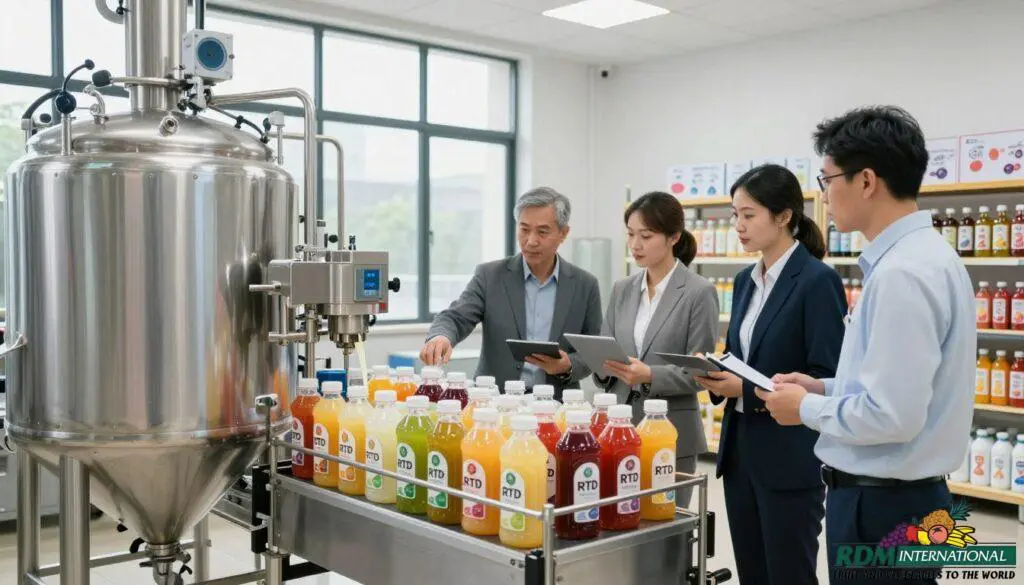
By making preparation simpler, you create a more consistent environment. This consistency is key to beverage production scalability. It lets you increase production when demand rises.
Maximizing floor space by removing raw material storage
Large storage for raw fruits and additives takes up a lot of space. This space could be used for more bottling. Switching to concentrated liquid bases frees up this space right away.
You no longer need big cold storage or areas for bulky raw materials.
- Increased agility: Move equipment closer together to reduce transit time.
- Better organization: Clear aisles improve safety and worker movement.
- Lower overhead: Reduce the energy costs associated with maintaining large climate-controlled storage zones.
Synchronizing pump flow rates with bottling speeds
A balanced line is crucial for optimizing RTD beverage production. If pumps move faster than fillers, you risk waste. Slow flow rates mean idle bottling equipment and lost revenue.
Remember, cooling capacity is often the first bottleneck when scaling production for RTD beverages. As you increase production, make sure your cooling systems can handle the load. Proper pump flow rates ensure your system runs smoothly and efficiently.
By focusing on these technical improvements, you can enhance your beverage production scalability. When your line works together, you reduce waste and increase your return on investment.
Managing Formulation and Flavor Profiles
Getting the perfect flavor is key to your brand’s success. As you grow, managing your liquid systems gets more complex. Working with a specialized supplier can help. They handle the technical side of rtd beverage manufacturing, freeing your team to focus on growing your brand.
Customizing your RTD beverage manufacturing strategy
Every brand has its own unique taste. You need a flexible way to rtd concentrate formulation that fits your needs. A good partner takes care of the chemical details, making sure your ingredients are always ready for fast production.
This change lets you quickly adapt to new trends. You can introduce new flavors without changing your whole production process. Customization becomes a way to stand out, not a problem.
Maintaining brand integrity with consistent concentrate ratios
Consistency builds customer loyalty. If a customer expects a certain taste, they’ll notice if it changes. Keeping the concentrate ratios the same is crucial for a consistent taste.
Automated systems help keep these ratios precise. They remove the uncertainty of manual mixing, protecting your brand’s taste. Consistency is not just a goal; it’s a must for lasting success.
Scaling up production without compromising taste
When you increase production, keeping your rtd production line efficiency high is vital. Scaling up can risk flavor stability if the equipment can’t handle it. Make sure your pump flow rates match your bottling speeds to keep the flavor right.
Quality control should be part of your automated lines. This way, you can meet higher demand without losing flavor. You can grow your business with confidence, knowing your taste stays perfect.
Safety and Sanitation in Concentrated Beverage Processing
Scaling up your output means cleanliness is key. Since many products skip boiling, your cleaning must be flawless to keep products safe. Keeping your facility clean is crucial for optimizing rtd beverage production and protecting your customers.
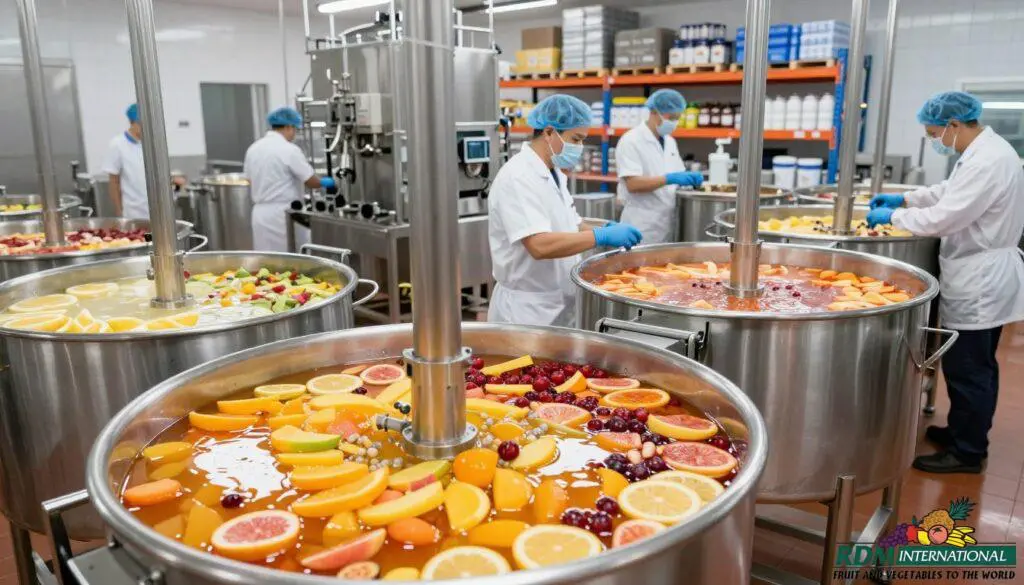
Reducing contamination risks with closed-loop systems
Clean-in-Place (CIP) is the base of your system. Closed-loop systems keep products safe from outside contaminants. This method cuts down on human contact and stops airborne particles from getting into your rtd beverage manufacturing lines.
“Quality is never an accident; it is always the result of high intention, sincere effort, intelligent direction and skillful execution.”
Best practices for cleaning and maintaining syrup pumps
Your syrup pumps are vital and need regular care. A strict flushing schedule stops residue buildup. Make sure seals and gaskets are perfect to avoid leaks and bacteria growth.
Watching pump performance helps catch sanitation problems early. Keeping your equipment clean makes your concentrated beverage processing efficient and reliable. Regular checks are a small price for long-term stability.
Meeting regulatory standards for liquid base handling
Following local and federal rules is essential in the food and beverage world. You must document every cleaning to show compliance during audits. Keeping these standards high builds trust with your customers and protects your brand.
When you focus on safety, you build a culture of excellence. This dedication to cleanliness lets you grow your business with confidence. A clean facility is the best way to ensure your rtd beverage manufacturing success in the long run.
Training Your Team for Automated Production
To achieve beverage production scalability, start by training your team on advanced systems. Moving from manual to automated processes changes your employees’ roles. They become skilled operators, crucial for maintaining quality in modern manufacturing.
Shifting staff focus from manual labor to system monitoring
Automated systems need less manual work. With RDM International solutions, your team can focus on monitoring important data. This shift improves safety and keeps production records accurate.
By monitoring the line, your staff can spot issues before they affect output. This proactive approach is key to efficient concentrated beverage processing. Your team acts as the facility’s eyes and ears, ensuring quality in every batch.
Developing standard operating procedures for RDM International products
Success in modern facilities depends on clear processes. Create standard operating procedures (SOPs) for RDM International bulk liquid bases. These documents help your team understand rtd concentrate formulation and how to use these inputs correctly.
Standardization removes uncertainty, ensuring consistent quality. When your team follows a proven plan, errors decrease. This consistency is crucial for maintaining brand quality as you grow.
Troubleshooting common issues in automated liquid lines
Even top systems face minor issues. Training your team to solve these problems quickly keeps downtime low. Understanding the liquid lines helps them fix small problems fast.
Empowering your team with the right knowledge fosters a culture of reliability. When they can solve small problems quickly, your production line stays efficient. This expertise sets industry leaders apart.
| Role Feature | Manual Processing | Automated Processing | Benefit |
|---|---|---|---|
| Ingredient Handling | High physical effort | Automated dosing | Reduced injury risk |
| Data Collection | Paper-based logs | Digital tracking | Higher accuracy |
| System Oversight | Reactive adjustments | Proactive monitoring | Increased uptime |
Conclusion
Your journey to a more profitable facility begins with the right mindset. Scaling production for rtd beverages needs smart automation and quality liquid bases from partners like RDM International.
You have the tools to make your facility lean and efficient. Focus on making your rtd production line better. This lets your team grow instead of getting stuck on small problems.
Use these tips to improve your facility today. A strong system means every bottle meets your customers’ high standards. Your focus on precision and consistency will help you stand out in a competitive market.
Get in touch with your equipment suppliers to see how these upgrades fit your needs. Start making changes now to strengthen your place in the beverage industry. Your path to better manufacturing is clear.
FAQ
Identifying inefficiencies in whole-fruit processing
Using raw fruit means you’re at the mercy of seasons and labor. These steps create big bottlenecks that slow your growth. Each batch needs a lot of prep before it’s ready.
The hidden costs of manual ingredient handling
Manual batching is slow and introduces recipe drift and quality issues. Your labor costs rise while output stays the same. This makes it hard to stay competitive.
Evaluating throughput limitations in your facility
To understand scaling production for rtd beverages, find where your flow stops. It might be cooling capacity or slow mixing. Knowing these limits is the first step to modernizing.
Understanding the mechanics of liquid beverage bases
Liquid bases offer precision. Treating concentrated beverage processing as a distinct field lets you achieve repeatability. This is impossible with raw ingredients.
Why industry leaders are moving toward pre-clarified systems
Brands like RDM International offer pre-clarified systems for clear, consistent output. This shift lets you focus on packaging speed, not filtering.
Defining the scalability potential of concentrated processing
The beauty of beverage production scalability is in the ratio. Concentrates take less space and fit into automated lines. Your growth is limited by bottling speed, not prep.
Eliminating the mess of traditional fruit sorting
Switching to RDM International bases removes waste, pests, and sanitation issues. Your facility becomes cleaner and more professional overnight.
Streamlining your supply chain with standardized inputs
Standard inputs mean no worries about fruit Brix levels. You get a consistent product, simplifying logistics and keeping rtd concentrate production steady.
Preparing your facility for a cleaner production environment
Concentrates need less storage space. This lets you reorganize for optimizing rtd beverage production and better workflow.
The role of automated dosing in batch consistency
Automated dosing is key to rtd beverage manufacturing. It removes human error, ensuring every bottle tastes the same. This protects your brand.
Selecting the right pumping hardware for your viscosity needs
Not all concentrates are the same. You need hardware that handles your base’s viscosity well. This ensures smooth flow and prevents splashing.
Integrating RDM International bases into existing lines
Modern syrup pumps can fit into your current setup easily. This integration is crucial for scaling beverage production lines with rtd concentrates without a big overhaul.
Standardizing flavor profiles across every production run
Your customers want the same taste every time. Using rtd concentrate formulation protocols locks in flavors. This is crucial for large production volumes.
Reducing human error in formulation and mixing
Automating mixing removes the risk of human mistakes. This precision is vital for rtd production line efficiency over long periods.
Quality control protocols for concentrated beverage processing
QC checks at the pump stage ensure perfect dilution ratios. This high-level monitoring is what separates amateur from professional rtd beverage manufacturing facilities.
Reducing downtime through simplified ingredient preparation
Using RDM International bases cuts setup time. This means more time on the bottling line, increasing daily yield.
Maximizing floor space by removing raw material storage
Concentrates take up less space. By removing storage for bulky fruit, you can add more lines or expand concentrated beverage processing capabilities.
Synchronizing pump flow rates with bottling speeds
The key to optimizing rtd beverage production is balance. Matching syrup injection speed to water flow and filler intake creates a seamless process.
Customizing your RTD beverage manufacturing strategy
Working with a dedicated supplier lets you tweak rtd concentrate formulation for specific tastes or trends. This is done without needing to change your whole process.
Maintaining brand integrity with consistent concentrate ratios
Brand integrity is built on trust. Sticking to precise concentrate ratios ensures your signature taste is never altered as you grow.
Scaling up production without compromising taste
As you increase volume, flavor systems can grow complex. A reliable partner like RDM International manages this complexity. This ensures your brand stays strong even as you scale.
Reducing contamination risks with closed-loop systems
Closed-loop systems are key for rtd concentrate production. They keep the product away from air, reducing microbial contamination risks. This ensures a shelf-stable final product.
Best practices for cleaning and maintaining syrup pumps
A robust Clean-in-Place (CIP) strategy is essential. Regular maintenance of your pumping hardware keeps residue out between batches. This preserves the purity of your next flavor run.
Meeting regulatory standards for liquid base handling
Following strict sanitation protocols keeps you compliant with food safety regulations. Professional concentrated beverage processing requires documented cleaning cycles. This is crucial for passing audits and protecting consumers.
Shifting staff focus from manual labor to system monitoring
As you improve beverage production scalability, your team’s role changes. They become experts in monitoring flow rates and system health. This leads to a more skilled and engaged workforce.
Developing standard operating procedures for RDM International products
Clear SOPs ensure your team knows how to handle rtd concentrate formulation and equipment maintenance. This consistency is the backbone of a successful, high-output facility.
Troubleshooting common issues in automated liquid lines
Training your team to spot issues like air pockets or flow fluctuations early prevents small problems from becoming big shutdowns. This proactive approach is essential for maintaining rtd production line efficiency.
How does scaling beverage production lines with rtd concentrates improve my bottom line?
Switching to rtd concentrate production cuts labor costs and waste. It also increases rtd production line efficiency. This means you can produce more units in less time, lowering costs per bottle.
Can I use my existing bottling equipment for rtd beverage manufacturing?
Yes, most existing lines can be adapted for optimizing rtd beverage production with precision syrup pumps. This lets you transition to concentrated beverage processing without a complete overhaul.
What is the main benefit of RDM International liquid bases over raw fruit?
The main advantage is beverage production scalability. RDM International bases are standardized and pre-clarified. They eliminate the variability and mess of raw fruit, ensuring consistent and clean scaling production for rtd beverages.
How do I ensure flavor consistency during rtd concentrate formulation?
Consistency is achieved through automated dosing and high-quality concentrate ratios. Precision hardware in rtd concentrate formulation eliminates human error. This ensures every batch meets your brand’s standards.
Is it difficult to maintain sanitation in concentrated beverage processing?
Not if you use a closed-loop system and regular Clean-in-Place (CIP) schedules. These practices are standard in rtd beverage manufacturing to prevent contamination and meet all regulatory safety requirements.
Does scaling production for rtd beverages require more floor space?
Actually, it often requires less. RTD concentrate production allows you to remove large raw material storage areas. This effectively optimizes rtd beverage production by maximizing your available square footage for bottling lines.