


Ever wondered how fruit drinks always taste the same? It’s all about precise science. Mastering these technical metrics is key for top-notch quality.
Knowing about juice concentrate brix levels lets you keep quality consistent. This knowledge helps your team follow rules and work better. It keeps your brand’s good name and makes customers happy every time.
This guide shows you how to get better at analyzing your work. We’ll cover the basics that lead to success in food and drinks. Let’s get into the important data to improve your work now.
Key Takeaways
- Learn the core science behind sugar content measurement.
- Ensure your facility meets all federal safety and quality standards.
- Discover how to achieve batch-to-batch consistency in your output.
- Improve operational efficiency through accurate data analysis.
- Protect your brand by mastering essential industry metrics.
The Fundamentals of Brix and Juice Concentration
The secret to a perfect-tasting drink often hides within a simple measurement known as Brix. When you source juice concentrate brix specifications, you are essentially looking at the backbone of your product’s flavor profile. This metric acts as a universal language for manufacturers and suppliers alike.
Defining the Brix Scale in Beverage Science
In the world of food science, the brix scale for juices provides a precise way to quantify dissolved solids. Specifically, one degree Brix is defined as one gram of sucrose in 100 grams of a solution. This measurement focuses primarily on the sugar content, which directly influences the sweetness and body of your final beverage.
By utilizing this scale, you can accurately assess the density of your raw materials. It is a reliable method to ensure that your ingredients meet the exact requirements for your specific recipes. Consistency is key when you are scaling up production for a national market.
Why Brix Matters for Juice Quality and Consistency
Understanding the importance of brix levels is vital for maintaining the integrity of your brand. When you monitor juice brix levels closely, you gain better control over the sensory experience of your customers. If the sugar content deviates, the flavor intensity will shift, potentially leading to dissatisfied consumers.
Managing brix levels in beverages offers several distinct advantages for your facility:
- Batch Uniformity: Ensures every bottle tastes exactly like the last.
- Cost Efficiency: Prevents the waste of expensive raw materials through precise dilution.
- Supplier Accountability: Provides a clear benchmark to verify the quality of incoming shipments.
- Regulatory Compliance: Helps you meet the labeling requirements for sugar content.
By prioritizing these measurements, you protect your reputation and streamline your operations. You will find that a disciplined approach to testing leads to a more stable and profitable production cycle.
The Role of RDM International in Industry Standards
RDM International leads the industry by focusing on key technical standards. In large-scale beverage manufacturing, the importance of brix levels is crucial. A trusted partner acts as an extra quality assurance team, ensuring every batch meets your needs.
Commitment to Quality Control and Ingredient Integrity
High standards require a focus on ingredient quality and supply chain transparency. RDM International uses rigorous testing protocols to check raw materials against your specs. They verify the juice concentrate brix before it reaches you, preventing production delays.
They do more than just deliver. They give you the data and documents needed for consistent quality control. This is key for brands that value flavor and consistency.
How RDM International Supports Your Production Needs
Dealing with raw material sourcing can be tough. RDM International makes it easier by checking the quality of every ingredient. They know the importance of brix levels for the perfect flavor in your drinks.
Whether you’re growing your production or perfecting a new recipe, their team is there to help. They focus on the juice concentrate brix to make sure your ingredients are always ready. You can count on them to help you meet your customers’ high expectations.
Essential Tools for Measuring Brix Levels
Choosing the right tools is key when monitoring juice brix levels. The right equipment ensures quality and consistency in your products. Reliable tools mean every batch meets your high standards.
Choosing the Right Refractometer for Your Facility
Think about your daily production and how fast you need results. Big facilities need tools that give quick, accurate readings. Also, look for easy-to-clean devices for a busy setting.
Choosing the right refractometer is crucial for quality control. It should fit your workflow, whether testing raw fruits or finished products. Durability and ease of use are top priorities.
Digital Versus Analog Refractometers Explained
Analog refractometers use manual light refraction and a visual scale. They’re affordable but can have human error. You need proper lighting and focus for accurate readings.
Digital refractometers are the new standard. They give readings accurate to ±0.1°Bx and have automatic temperature compensation. This is great for changing warehouse conditions.
Choosing between digital and analog depends on your budget and precision needs. Digital units are more efficient and reliable. They help you control your juice quality with the right technology.
Step by Step Guide to Refractometer Testing
Learning how to measure brix levels is key to quality in your beverage line. A standardized workflow ensures every batch meets your quality standards. Consistency is the key to trust with your customers.
Preparing Your Juice Concentrate Sample
Start by cleaning your workspace. You only need a few drops of juice concentrate for a reliable reading. This keeps waste down.
Make sure the sample is well-mixed. This ensures the sugar content is evenly distributed. If the concentrate has been sitting, gently stir it to mix it well.
Calibrating Your Equipment for Accurate Readings
Calibration is crucial. Use distilled water or a certified sucrose solution to set your refractometer to zero.
If your device is not calibrated, your results will be off. Regular calibration prevents costly errors and keeps your data reliable.
Performing the Measurement Process
With your device ready, place a few drops of the sample on the prism surface. Close the cover gently to spread the liquid evenly without air bubbles.
Look through the eyepiece or check the digital display for your reading. Knowing how to measure brix levels correctly lets you adjust your production flow in real-time.
| Common Error | Impact on Result | Corrective Action |
|---|---|---|
| Dirty Prism | Inaccurate Reading | Clean with soft cloth |
| Air Bubbles | Fluctuating Data | Re-apply sample carefully |
| Wrong Temperature | Density Variance | Allow sample to stabilize |
Interpreting Your Brix Readings
After getting your measurements, the real challenge starts. It’s key to remember that your device shows the whole solution, not just one part. By understanding the brix scale for juices, you can see how good your production is.
What Your Results Tell You About Sugar Content
Many think a high reading means lots of sugar. But, it really shows total dissolved solids. This includes sugars, acids, and minerals. So, it’s not just about sugar; it’s about the fruit’s full flavor.
The brix scale for juices looks at all these things. This means you can trust the numbers to show the juice’s overall concentration. Understanding this helps keep your juice tasting right. It makes sure every batch is as good as the last.
Identifying Deviations from Expected Density
If your numbers don’t match what you expect, it’s time to look at your juice concentrate density. A big change might mean something’s wrong with your ingredients or how you make juice. Finding these problems early helps you fix them before they ruin your batch.
If you see a steady change, check your equipment and how you store things. Keeping a steady juice concentrate density is crucial for quality and keeping your brand consistent. By watching closely, you avoid expensive mistakes and make sure every bottle is up to your standards.
Calculating Proper Dilution Ratios
Working with juice concentrates means knowing how to get the right dilution ratios. This is key to making the perfect product. You need to balance the concentrate’s strength with the water you add. Using formulas helps keep your results the same every time.
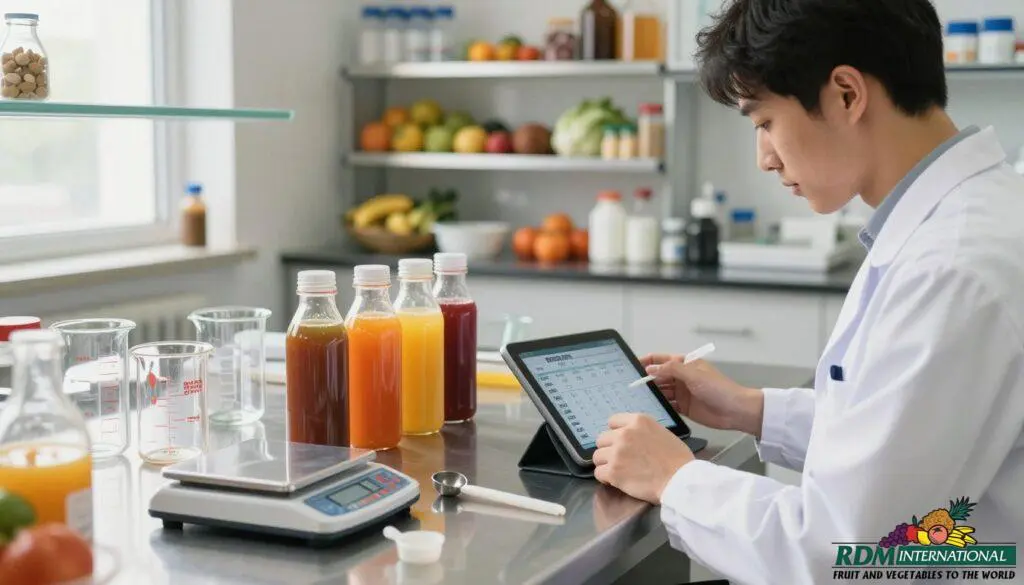
The Relationship Between Brix and Water Addition
It’s all about finding the right mix of concentrate and water. Adding more water lowers the Brix level. Keeping this balance is crucial for flavor and meeting regulations.
To maintain quality, follow these steps:
- Check the Brix level of your concentrate with a refractometer.
- Set your target Brix for your product.
- Figure out how much water you need to reach that Brix.
- Mix well to make sure the solution is even.
Formulas for Achieving Target Finished Product Brix
Using a simple math formula can make your work easier. It helps you manage costs and blending. The formula for cost per BMT is a big help.
To find your cost per BMT, use this formula: Price per BMT = Price per MT ÷ (°Bx ÷ 100). It shows the real value of your concentrate, no matter its strength.
| Concentrate Brix | Target Brix | Dilution Factor |
|---|---|---|
| 65° | 12° | 5.4x |
| 50° | 10° | 5.0x |
| 40° | 8° | 5.0x |
Mastering dilution ratios gives you control over your production. This precision ensures your customers always get a great product.
Managing Quality Control in Juice Production
When you focus on the importance of brix levels, you make sure every batch is top-notch. Regular checks protect your brand’s reputation and your profits. This way, you avoid wasting money on water instead of the solids you need.
Establishing Baseline Brix Standards for Your Brand
Creating clear, internal benchmarks is key to success. You should set specific Brix ranges for each product. These standards guide your team during daily production.
When your team knows these targets, they can catch any issues early. Consistency is the hallmark of a trusted brand. Setting these standards ensures you deliver quality to your customers every time.
Troubleshooting Inconsistent Batch Results
Even with strict rules, unexpected changes in readings can happen. Remember, a 1°Bx change can mean a 1–2% cost difference per shipment. This adds up fast. So, when results vary, you must find the cause right away to keep your profits safe.
To solve these problems, follow these steps:
- Verify equipment calibration to ensure your refractometer is accurate.
- Check sample temperatures, as heat changes can distort Brix readings.
- Inspect your mixing process to make sure the concentrate and water mix well.
- Review your raw material logs to see if natural changes affect density.
By tackling these issues, you keep the importance of brix levels in check. Quick action prevents small problems from becoming big, costly mistakes. Staying on top of things keeps your output both high-quality and affordable.
Factors Influencing Juice Concentrate Density
To keep your production line consistent, you need to understand what affects juice concentrate density. Many things can change your readings. It’s key to consider both the environment and the biology of your products every day.
Temperature Effects on Brix Measurements
Temperature is a big factor that can mess up your data. The refractive index of liquids changes with temperature. So, your equipment might give wrong results if you don’t adjust for these changes.
A 10°C change can make a Brix reading off by 0.4–0.5°Bx. This small change can cause big problems in your final product if you don’t fix it.
Natural Variations in Fruit Harvests
Fruit itself adds complexity. The sugar and acidity levels vary from batch to batch. This is because of natural differences in fruit harvests.
You need to be flexible in how you process. You might have to tweak your equipment settings to get the right juice concentrate density with different harvests.
Here are some common things that can affect your results:
- Ambient temperature in the testing area.
- The type and ripeness of the fruit.
- The method used to concentrate the juice at first.
- The amount of solids or pulp in the sample.
Best Practices for Storage and Handling
Keeping your juice concentrate safe needs a careful plan for controlling the environment. By managing your stock well, you make sure every batch stays the same from start to finish. Consistency is key for a top-notch drink brand.
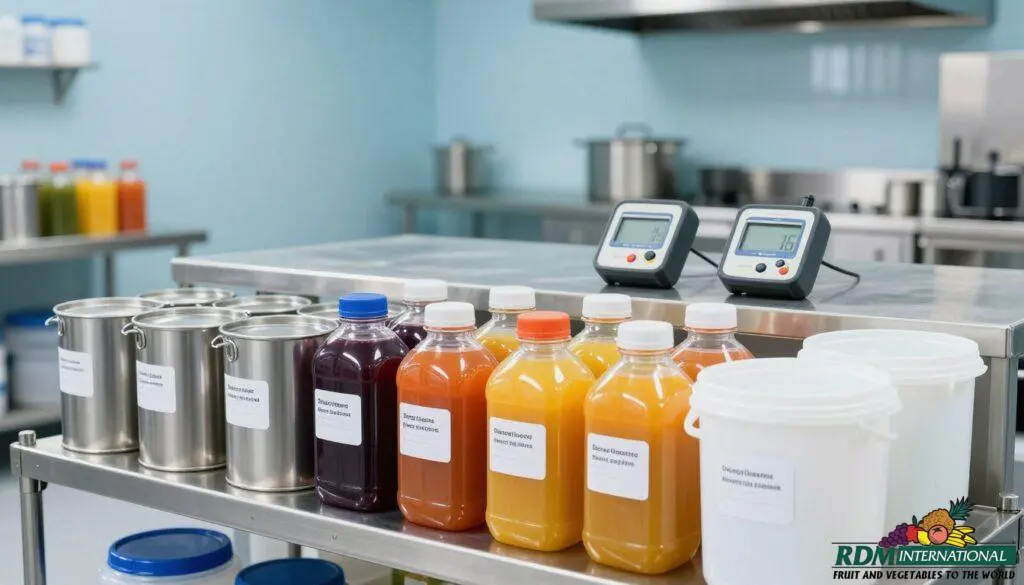
Maintaining Stability During Concentrate Storage
The world standard for Brix is 20°C. Storing your place near this temperature stops ingredients from getting stressed by heat. Stable temperatures are crucial because heat can change the chemical makeup of your concentrate.
It’s important to have a climate-controlled area to keep your supplies safe. Changes in temperature or humidity can damage your fruit solids. Keeping a steady environment means your ingredients are always ready for use.
Preventing Brix Drift in Your Inventory
Brix drift happens when the concentration levels change due to bad handling or exposure. This can mess up the taste and quality of your drink. Regular monitoring of your stock is the best way to spot these changes early.
Using a strict rotation policy, like First-In, First-Out (FIFO), keeps your stock fresh. Always check seals and containers for damage that could spoil your supplies. These simple steps help you keep your drink’s exact recipe.
| Storage Factor | Recommended Range | Impact on Quality |
|---|---|---|
| Temperature | 18°C – 22°C | Prevents Brix drift |
| Humidity | Below 50% | Protects packaging integrity |
| Light Exposure | Dark/Low Light | Prevents oxidation |
| Inventory Rotation | FIFO Method | Ensures ingredient freshness |
Common Mistakes When Measuring Juice Brix
Learning how to measure brix levels right means avoiding common mistakes. Even small errors can greatly affect your results. By following a standard process, you keep your quality checks reliable and consistent.
Avoiding Contamination During Sample Collection
One big mistake is not cleaning your equipment well. Always wipe your refractometer prism clean and dry it with a soft cloth after each use. This prevents contamination and keeps your juice brix levels accurate.
Also, use a fresh sample for each test. Letting a sample sit too long can make it seem sweeter than it is. Quick, clean samples are key to keeping your data reliable.
Correcting for Ambient Temperature Fluctuations
Temperature affects liquid density, which changes your readings. If your room is too hot or cold, your readings might be off. Always calibrate your equipment with distilled water and certified sucrose solutions to adjust for temperature changes.
Even with digital refractometers that adjust for temperature, check your samples are at room temperature. Regular calibration ensures your how to measure brix levels process is accurate. These steps help protect your brand from the dangers of wrong juice brix levels.
Advanced Applications for Brix Monitoring
Advanced Brix monitoring gives you a strategic edge. It goes beyond simple tests. You learn how brix levels in beverages affect your profits. This helps you improve your processes and ensure quality in every batch.
Optimizing Cost Efficiency Through Precise Dilution
Controlling dilution ratios is key to saving ingredients. Mastering interpreting brix levels lets you adjust water with precision. This keeps your concentrate strong and your profits high.
Automated systems keep your production consistent. They help you spot when to tweak your equipment. This precision turns quality control into a profit maker.
“Quality is never an accident; it is always the result of high intention, sincere effort, intelligent direction and skillful execution.”
Ensuring Regulatory Compliance in the United States
Following federal and international standards is crucial for your brand. The Codex Alimentarius sets Brix values for fruit juices. Meeting these standards means your products are legal and safe.
Regular audits keep you compliant. They show your dedication to quality. Here’s how different monitoring methods affect your goals.
| Strategy | Cost Impact | Compliance Risk | Efficiency Gain |
|---|---|---|---|
| Manual Spot Checks | Moderate | High | Low |
| Automated Monitoring | Low | Minimal | High |
| Predictive Analytics | Very Low | None | Very High |
Using these advanced methods boosts your efficiency and meets legal standards. Consistent monitoring is crucial for success in the beverage industry.
Conclusion
Learning about juice concentrate brix is key for anyone in the beverage business. It affects the taste and profit of your products. Keeping standards high is crucial.
Checking your work regularly helps meet customer needs. Using these methods, you control your production better. This accuracy prevents mistakes and keeps things running smoothly.
Good data is essential for success. Focusing on juice concentrate brix quality helps your brand in the US. Improve your processes to boost efficiency.
Being dedicated to quality makes you stand out. Use these tips every day. For more help, contact companies like RDM International.
FAQ
Why is understanding juice concentrate brix levels so important for new manufacturers?
It’s key to measuring ingredient quality and concentration. Without it, you can’t ensure consistent flavor or value from suppliers.
What exactly is juice concentrate brix measuring?
It measures dissolved solids in the liquid by weight. This includes sugars, acids, and minerals that affect flavor and density.
How do you maintain consistent juice brix levels across different seasons?
Adjust dilution ratios based on fruit harvests. Monitor brix levels in raw shipments to calculate water addition for your product standard.
What are the standard brix levels in beverages like apple or orange juice?
FDA guidelines provide a “Brix table” for 100% juices. Orange juice is around 11.8 Brix, apple juice 11.5. These levels are crucial for taste and labeling.
Can you explain how to measure brix levels accurately in a busy kitchen or factory?
Use a digital refractometer for accurate measurements. Clean the prism, apply juice, and get a temperature-compensated reading in seconds.
Does juice concentrate density change during storage?
Yes, without proper handling. Evaporation or fermentation can alter density. Temperature-controlled storage and airtight sealing are essential.
What is the primary importance of brix levels in cost management?
Brix levels affect your profit. Hitting the target Brix exactly saves on expensive concentrate, optimizing costs and profit.
Are there any tricks to interpreting brix levels if the juice is very acidic?
High acidity can affect refractive index. For acidic juices, use an “acid correction” formula. But for most, the standard Brix reading is enough.
Why is the brix scale for juices different from the scale used for wine or beer?
The brix scale measures sucrose percentage. In juice, it’s about flavor and nutrients. In wine or beer, it predicts alcohol content before fermentation.