


Ever thought about making restaurant-quality meals in your commercial kitchen? Scaling up without losing flavor is possible. Modern culinary tech is changing what we think about frozen ingredients.
Using high volume food production with frozen ingredients keeps your food consistent and boosts profits. Advanced flash-chilling locks in nutrition and taste, just like fresh.
Efficiency is key in today’s fast market. Switching to frozen ingredients helps you stay ahead. It meets customer needs while improving your kitchen’s workflow.
Key Takeaways
- Frozen items now offer nutritional profiles nearly identical to fresh produce.
- Strategic use of these supplies reduces waste and lowers overall costs.
- Modern technology ensures consistent texture and flavor across large batches.
- Operational shifts allow your team to focus on creativity rather than prep work.
- Scaling your output becomes easier when you rely on reliable, pre-processed stock.
The Evolution of Modern Commercial Kitchen Operations
Modern commercial kitchen operations have changed a lot lately. Chefs and managers now focus more on reliability, safety, and quality. They’ve moved away from the idea that fresh is always better than frozen.
Shifting Perspectives on Frozen Quality
The old view on frozen food is changing. People now see the science behind cold storage. Freezing slows down microorganism growth and keeps food quality high.
By freezing food at its freshest, you keep it safe and full of nutrients. This makes your menu items vibrant and healthy.
“The modern kitchen is defined by its ability to maintain high standards through smart, science-backed ingredient management.”
This change helps your commercial kitchen operation stay consistent. Using high-quality frozen ingredients means you can rely on a steady quality. This is better than fresh produce, which can vary with the seasons.
The Role of Technology in Ingredient Preservation
New technology has changed food storage. Modern freezing methods keep food’s structure intact. This prevents damage from ice crystals, making frozen food just as good as fresh.
Adding these technologies to your commercial kitchen operation makes things more stable. You can plan your inventory better, knowing your food is well-preserved. Here’s a table showing the differences between old storage and new frozen methods.
| Feature | Traditional Storage | Modern Frozen Solutions |
|---|---|---|
| Microbial Activity | High risk of spoilage | Effectively inhibited |
| Nutrient Retention | Degrades over time | Locked at peak harvest |
| Waste Levels | High due to perishability | Minimal with portion control |
| Consistency | Variable by season | Standardized year-round |
High Volume Food Production with Frozen Ingredients: A Strategic Overview
Using high volume food production with frozen ingredients can change how your kitchen works. It lets you budget better by avoiding the ups and downs of fresh markets. This way, you can focus more on quality and service.
Defining the Operational Benefits
One big plus is the predictability it brings to your finances. Frozen goods mean a fixed cost for your inventory. This makes planning your budget for the long term much simpler.
This stability is key for growing your business while keeping profits high.
“Efficiency is doing things right; effectiveness is doing the right things.”
Your team also saves time. Frozen items often come pre-processed, so your staff doesn’t spend as much time on prep. This lets you keep up with high volume food production with frozen ingredients without losing quality.
Reducing Waste Through Precise Portion Control
Managing waste is a big challenge in any kitchen. Frozen ingredients help you use only what you need for each service. This precision means you avoid throwing away fresh produce that’s past its prime.
By preparing only what you need, you control your inventory better. This lowers food costs and helps your kitchen run more sustainably. Using high volume food production with frozen ingredients is a smart move to make your kitchen more efficient every day.
Case Study: How RDM International Transformed Their Workflow
Many commercial kitchens face the same problems as RDM International did before they changed. They struggled to grow because of old ways of working. They found out that doing things by hand was slowing them down.
Identifying the Bottlenecks in Traditional Prep
RDM International’s main problem was wasting time on simple tasks. Staff spent hours on tasks like peeling and chopping. This left little time for creativity in the kitchen.
As orders grew, so did the problem of mistakes. Human errors led to uneven flavors and sizes. This made it hard to keep up with customer expectations.
The Decision to Pivot Toward Frozen Solutions
To fix these issues, RDM International started using frozen ingredients. This cut down on prep time a lot. They could now serve food faster and better.
This change also let the kitchen team be more creative. Chefs could work on making dishes better instead of just chopping. The table below shows how much better things got.
| Operational Metric | Traditional Prep | Frozen Solution |
|---|---|---|
| Prep Time | High (Manual) | Minimal (Ready-to-use) |
| Waste Levels | Significant | Negligible |
| Consistency | Variable | Standardized |
| Labor Focus | Repetitive Tasks | Culinary Innovation |
Achieving Scalability in Large Scale Food Manufacturing
Expanding your business means you need to be able to do things well in many places. To grow in large scale food manufacturing, you must have a strong base. This base should handle more work without losing quality.
Smart infrastructure is key to staying flexible. It helps you meet demand while keeping things efficient.
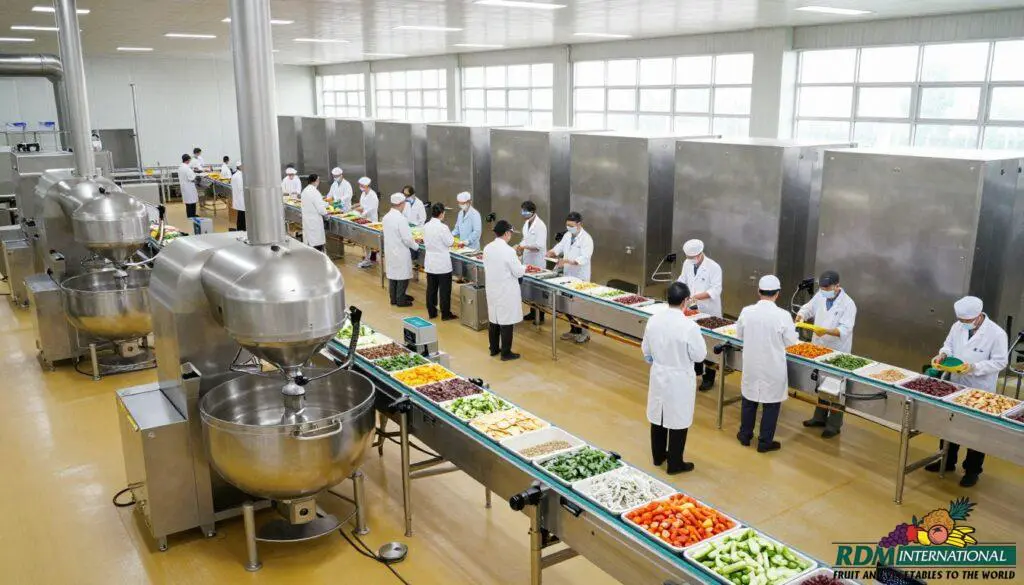
Building Infrastructure for Rapid Growth
To grow fast, invest in systems that grow with you. Scalability is more than just buying more machines. It’s about making your workflow handle more work smoothly.
Choose modular equipment for easy upgrades. This lets your frozen food production line change with new products or bigger orders without big changes to your place.
Standardizing Processes Across Multiple Facilities
Being consistent is key to a strong brand. When you have many places, strict rules are needed to keep quality high everywhere.
Standardizing helps cut down on mistakes and saves time on fixing them. Uniform rules mean your team can do well, no matter where they are.
| Strategy | Benefit | Impact on Growth |
|---|---|---|
| Centralized SOPs | Uniform Quality | High |
| Modular Equipment | Flexibility | High |
| Cloud-Based Tracking | Real-time Data | Medium |
| Cross-Site Training | Staff Versatility | Medium |
Optimizing Your Supply Chain for Frozen Ingredient Processing
Building a strong supply chain is key to mastering frozen ingredient processing. Your supply chain is the backbone of your operation, making sure everything is ready to go. By focusing on these logistics, you lay the groundwork for success and quality.
Sourcing Reliable Frozen Suppliers
Finding the right partners is essential for keeping your food products top-notch. Look for suppliers who follow strict freezing standards. These standards help keep nutrients and freshness locked in. Working with trusted vendors ensures your raw materials meet customer expectations.
When checking out potential partners, ask about their freezing methods and storage. Reliable suppliers will be open about their processes. Choosing quality over quick fixes helps protect your brand and improves your frozen ingredient processing results.
Managing Cold Chain Logistics Effectively
After getting your ingredients, keeping the cold chain intact is crucial. Managing cold chain logistics well stops temperature changes that could harm your inventory. Even small temperature changes can cause ice crystals, affecting your food’s texture and quality.
Invest in tools that track your shipments in real-time. These tools give you valuable data to spot risks early. By monitoring your frozen ingredient processing closely, you keep everything in top shape until it reaches your kitchen.
Maintaining Culinary Excellence in Mass Food Production
Your commitment to quality is key in mass food production. Scaling up might make you think frozen ingredients are a problem. But, when used right, they can be better than fresh, keeping nutrients at their best.
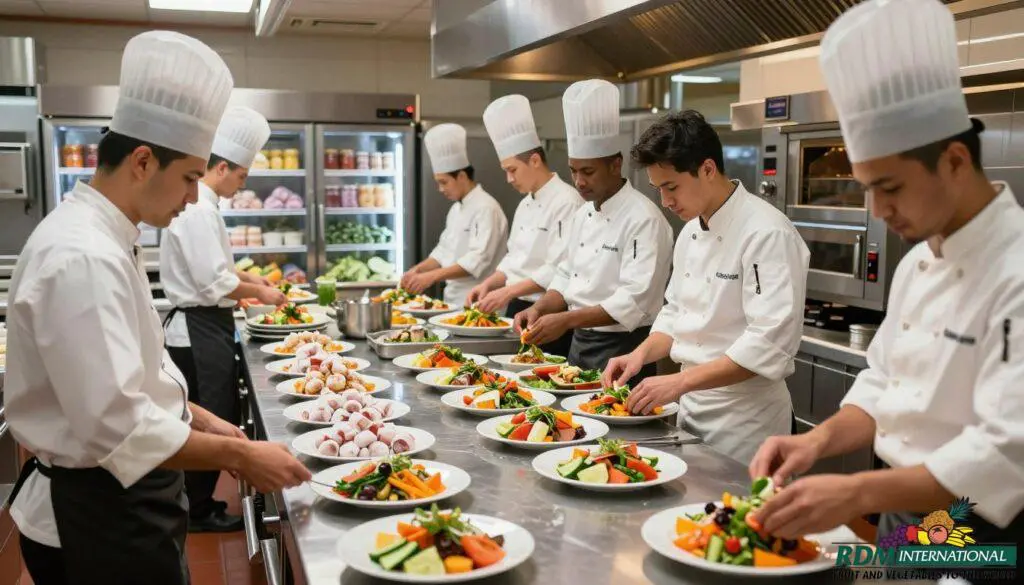
Techniques for Proper Thawing and Preparation
The secret to success is in your thawing process. Always thaw in the fridge to keep ingredients intact. This stops bacteria growth and keeps your food’s texture right.
Flash-freezing is a big help because it saves vitamins and minerals. Using these high-quality ingredients means your mass food production stays tasty and healthy. Don’t use quick thawing methods like warm water, as they can ruin your ingredients.
Ensuring Consistency in Flavor Profiles
To have the same taste in every serving, stick to your recipes. Make sure your team uses the exact amounts for each batch. Consistency is what makes a kitchen professional, and it’s doable with the right steps.
Set up a strict tasting schedule before sending out big batches. Check the flavor at each cooking stage to tweak it. This focus on detail keeps your quality high, boosting your brand’s reputation in mass food production.
Safety and Compliance in Efficient Food Production
Scaling up your kitchen means safety and compliance are top priorities. Keeping a high standard ensures your efficient food production is both profitable and trustworthy. This way, you protect your brand and serve your community well.
Navigating FDA Regulations for Frozen Goods
The U.S. food industry is closely watched to keep consumers safe. You must keep up with the Food Safety Modernization Act (FSMA) for your frozen food production. These rules demand detailed records of your supply chain steps.
Following these rules is more than avoiding fines. It’s about creating a safe culture. Regular audits help spot risks early. Staying in line with federal standards lets you grow with confidence.
Implementing Rigorous Quality Control Protocols
Quality control is more than just checking temperatures. To stand out, focus on the nutritional value of your ingredients. Choose items that are minimally processed and free from added sodium, sugars, and unhealthy fats.
Your team should follow strict procedures for each batch. Inspect raw materials as soon as they arrive to stop contamination. This dedication to quality sets your products apart in a busy market.
| Protocol Category | Primary Objective | Frequency |
|---|---|---|
| Ingredient Inspection | Verify nutritional purity | Every shipment |
| Temperature Monitoring | Prevent bacterial growth | Continuous |
| Regulatory Audit | Ensure FDA compliance | Quarterly |
| Staff Training | Maintain safety standards | Bi-annually |
Overcoming Common Challenges in Commercial Food Production
Every professional kitchen faces obstacles, but you can conquer them with the right plan. Achieving efficiency is rewarding, but it needs careful daily attention. Anticipating these challenges ensures your commercial food production stays profitable and consistent.
Managing Energy Costs and Storage Requirements
Keeping energy bills low while managing large-scale frozen storage is a big challenge. You need to balance cold inventory needs with rising electricity costs. Smart energy management is key to saving money.
Invest in high-efficiency refrigeration units for better insulation and smart monitoring. These systems track temperature changes in real-time, cutting down on spoilage and waste. Proper inventory rotation also maximizes storage space, keeping your commercial food production facility running smoothly.
Training Staff for Specialized Equipment Handling
Even the best tech is only as good as the people using it. Prioritize training to ensure your team knows how to use specialized machinery safely. When your staff is confident, they work better and make fewer errors.
Create a culture of continuous learning where employees can quickly learn new tools. Investing in your team reduces equipment downtime and boosts output quality. A well-trained team is crucial for any successful commercial food production operation, allowing for easy and precise scaling.
Conclusion
Using frozen ingredients makes your kitchen more efficient. It lets you scale up without spending too much. This frees your team to be creative, not stuck on prep work.
Success in the food industry means high standards. Focus on safety and quality to win customer trust. When every dish is perfect, your brand shines.
Start checking your supply chain today. Find partners who share your precision. Small changes can make a big difference in your profits.
Share your success stories to help others grow. Your feedback is gold for those on similar paths. Talk to local suppliers about frozen options for your menu.
FAQ
How does modern freezing technology preserve the quality of ingredients in a commercial kitchen operation?
Modern freezing technology is a game-changer. It stops microorganisms from growing and slows down chemical changes that cause spoilage. This keeps your ingredients fresh and full of nutrients, ensuring top-quality products every time.
Can high volume food production with frozen ingredients actually help stabilize my profit margins?
Yes, it’s a great way to keep your profits steady. Using frozen ingredients lets you buy in bulk, reducing costs. You also cut down on waste by only preparing what you need each day.
What did RDM International discover when they transitioned to frozen solutions?
RDM International found their old prep lines were slowing them down. Switching to frozen solutions streamlined their workflow. This freed up their team to focus on creativity and presentation.
How can I ensure consistency across multiple locations during large scale food manufacturing?
To keep things consistent, standardize your processes. Frozen ingredients are already portioned and preserved, ensuring quality. Uniform systems across all locations keep your brand’s flavor consistent, no matter the volume.
What are the most important factors to consider in cold chain logistics for commercial food production?
Keeping temperatures stable is key to prevent spoilage. Choose reliable suppliers who freeze ingredients properly. Use high-tech monitoring to keep your ingredients at the right temperature from processor to kitchen.
Does mass food production using frozen goods impact the final texture of the meal?
Proper thawing and preparation techniques make frozen ingredients indistinguishable from fresh. Follow specific protocols to protect food’s cell structure. This ensures consistent flavor and texture in every dish.
How do I stay compliant with FDA regulations when focusing on frozen food production?
Follow strict quality control and keep detailed records of temperatures and sources. FDA compliance is easier with minimally processed ingredients and transparent suppliers who value food safety.
What is the best way to manage energy costs and storage for frozen inventory?
Start with efficient equipment and train your staff well. Use high-efficiency freezers and keep doors closed to save energy. Proper training also ensures a smooth workflow by following FIFO protocols.