


Ever thought about how much time you spend peeling and chopping fresh veggies? In the fast-paced US food service world, every second matters for your profits.
Dealing with changing market prices and fresh produce’s short shelf life can be tough. Bulk frozen vegetables offer a smart fix to these issues.
They come with stable prices and are available all year. Plus, they’re pre-cut, saving you a lot of prep time. This means you can improve operational efficiency a lot.
Managing your stock gets easier with smart waste control plans. You only use what you need. This keeps your kitchen running smoothly and profitably all year.
Key Takeaways
- Stable pricing helps manage your monthly budget.
- Long shelf life reduces expensive food spoilage.
- Pre-cut ingredients slash daily labor requirements.
- Consistent quality is guaranteed regardless of the season.
- Better oversight of inventory and portioning.
- Quick access to nutritious meal components.
The Modern Foodservice Challenge: Balancing Quality, Speed, and Cost
Foodservice operators face a big challenge. They must serve tasty meals fast and keep costs down. This is all about making sure your food is great, served quickly, and affordable.
The foodservice world is full of hurdles. These include changing food prices, labor shortages, and strict food safety rules. Frozen vegetables for foodservice can help a lot. They are reliable, affordable, and still pack a nutritional punch.
Frozen veggies make menu planning and managing stock easier. They’re not like fresh produce, which can vary by season. Frozen veggies stay consistent all year, helping you keep your foodservice running smoothly.
- Consistency and Reliability: Frozen vegetables are available year-round, ensuring that your menu items remain consistent regardless of the season.
- Cost-Effectiveness: They are often less expensive than fresh produce, especially when considering the reduced waste and labor costs associated with their use.
- Nutritional Value: Frozen vegetables are typically frozen at the peak of freshness, preserving their nutritional content.
- Simplified Inventory Management: With a longer shelf life, frozen vegetables reduce the need for frequent inventory checks and minimize the risk of spoilage.
Adding frozen vegetables to your menu can make things easier and cheaper. It helps you keep the quality your customers love. This smart choice boosts your foodservice’s efficiency, letting you focus on giving great dining experiences.
Understanding the True Value of Bulk Frozen Vegetables in Your Operation
Bulk frozen vegetables bring unique benefits to your operation. They are frozen soon after harvest, keeping their nutrients and flavor locked in. This method preserves their quality and ensures a consistent taste in your dishes.
One big plus of bulk frozen vegetables is their consistent quality. They have uniform cuts, colors, and textures. This makes them perfect for large-scale buyers who need reliable ingredients.
What Makes Bulk Frozen Vegetables Different
Bulk frozen vegetables stand out from fresh produce in several ways. They are:
- Processed at peak freshness, ensuring maximum nutrient retention and flavor.
- Available year-round, regardless of seasonal variations, providing consistency in menu offerings.
- Standardized for quality, with consistent cuts, colors, and textures that meet specific culinary needs.
The Operational Advantage Over Fresh Produce
Comparing bulk frozen vegetables to fresh produce shows clear operational benefits. Here are some key differences:
| Aspect | Bulk Frozen Vegetables | Fresh Produce |
|---|---|---|
| Shelf Life | Longer shelf life due to freezing | Shorter shelf life, requires quicker use |
| Preparation Time | Reduced prep time due to pre-processing | More prep time required for cleaning, chopping, etc. |
| Seasonal Variability | Available year-round, unaffected by seasons | Subject to seasonal availability and variability |
Knowing these differences helps you make better choices for your menu and operations. Bulk frozen vegetables can improve your efficiency and consistency.
Dramatic Prep Time Reduction: Case Study from a High-Volume Restaurant
In a high-volume restaurant, time is of the essence. Serving quality dishes fast is key for happy customers and smooth operations. A big challenge is the time spent on food prep. A case study shows how using bulk frozen vegetables can cut prep time dramatically.
The Traditional Prep Process: Time Breakdown
Preparing veggies for a busy restaurant takes a lot of time. It includes washing, peeling, chopping, and blanching. Here’s a look at how long each step takes:
- Washing and cleaning: 10 minutes
- Peeling: 15 minutes
- Chopping: 20 minutes
- Blanching: 10 minutes
This adds up to 55 minutes just for veggie prep. It’s clear where time can be saved.
Switching to Bulk Frozen: Measurable Time Savings
Switching to bulk frozen veggies can save a lot of time. They’re pre-washed, pre-cut, and sometimes pre-cooked. This skips many steps in the traditional prep process. The time saved is huge:
- No washing or peeling needed
- Pre-chopped, saving 20 minutes
- Some are pre-cooked, cutting cooking time
The prep time drops to just a few minutes. This means big savings in labor costs.
Labor Cost Impact and Reallocation
Less prep time means lower labor costs. Staff can then focus on cooking, plating, or serving customers. This boosts overall efficiency. For a busy restaurant, this means:
- Lower labor costs from less prep time
- Better service quality as staff focus on other tasks
- Happier customers from faster, more efficient service
Waste Control: How One Hospital Kitchen Cut Food Waste by 60%
Fresh produce waste is a big problem in foodservice. It hurts the bottom line and our planet. The main issues are overordering, spoilage, and bad preparation.
The Fresh Produce Waste Problem
Fresh produce is easy to waste because it spoils fast. Overordering and bad inventory management cause a lot of waste. Also, bad preparation means a lot of trimmings and scraps.
- Overordering and subsequent spoilage
- Inefficient preparation leading to excessive trimmings
- Lack of precise portion control
These problems cost a lot and harm the environment. Knowing why we waste so much, we can find ways to stop it.
Frozen Vegetables and Portion Control Precision
Frozen vegetables help solve the waste problem. They offer precise portion control. Unlike fresh produce, frozen veggies are always the same size, cutting down on waste.
Financial Impact of Reduced Waste
Less waste means big savings for foodservice. A hospital kitchen using frozen veggies cut waste by 60%. This saved a lot of money, which they used to improve other areas.
| Waste Reduction Measure | Impact |
|---|---|
| Switching to Frozen Vegetables | 60% reduction in waste |
| Improved Portion Control | Consistent servings, reduced trimmings |
Waste reduction is good for the wallet. Using frozen veggies helps the environment and saves money.
Why Bulk Frozen Vegetables Improve Operational Efficiency in Multi-Unit Operations
Bulk frozen vegetables solve the problems of multi-unit foodservice operations. They help streamline operations across many locations, making everything more efficient.
Standardization Across Locations
Using bulk frozen vegetables lets you standardize menus across all locations. This means customers get the same quality and taste everywhere they go.
Standardization benefits include:
- Consistent customer experience
- Easier staff training across locations
- Simplified menu planning and execution
Inventory Management Simplification
Managing inventory across many locations is hard, but bulk frozen vegetables make it easier. They ensure a steady supply, helping you manage stock levels better and avoid waste.
| Inventory Management Aspect | Fresh Produce | Bulk Frozen Vegetables |
|---|---|---|
| Storage Requirements | Refrigerated storage, limited shelf life | Freezer storage, longer shelf life |
| Inventory Tracking | More frequent tracking due to shorter shelf life | Less frequent tracking, easier management |
| Waste Management | Higher waste due to spoilage | Lower waste, better portion control |
Predictable Ordering and Budget Control
Bulk frozen vegetables make ordering and budgeting easier. Their consistent quality and availability help you plan better and stay within budget.
Predictable ordering benefits include:
- Reduced risk of last-minute orders or emergency deliveries
- Better budget planning and cost control
- Improved relationships with suppliers due to consistent demand
Quality Consistency: A School District’s Year-Round Success Story
A school district made a big change by using bulk frozen vegetables. This move greatly improved their meal quality all year round. Frozen produce stays the same quality and is always available, making meals consistent.
Eliminating Seasonal Variability
School meal programs often face challenges with fresh produce quality. Bulk frozen vegetables solve this problem. They are frozen at the peak of freshness, keeping quality high all year.
- Consistent taste and texture
- Year-round availability of produce
- Reduced menu planning complexity due to predictable ingredient quality
Nutritional Value Preservation
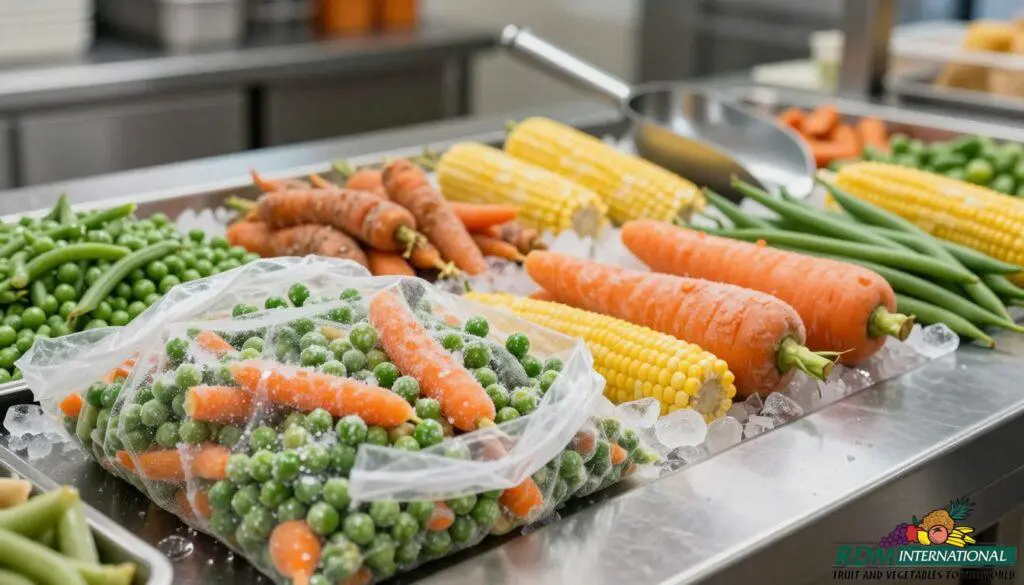
Frozen vegetables keep their nutrients because they are frozen quickly after picking. This means the meals are not only tasty but also full of good stuff. The school district’s meals were always nutritious thanks to frozen veggies.
Student Satisfaction and Program Compliance
Students loved their meals more because of the consistent quality. Using bulk frozen vegetables also helped the district meet nutritional standards better. It made planning meals easier and more reliable.
| Aspect | Fresh Produce | Bulk Frozen Vegetables |
|---|---|---|
| Seasonal Variability | High | Low |
| Nutritional Consistency | Variable | High |
| Student Satisfaction | Variable | Consistent |
Storage Efficiency and Space Optimization Benefits
Bulk frozen vegetables are a great way to improve your kitchen’s storage. They help foodservice operations use their space better.
One big plus of bulk frozen vegetables is how they save space. Unlike fresh produce, which needs coolers, frozen veggies go straight into the freezer.
Freezer Space vs. Cooler Space Requirements
Freezers are more space-efficient than coolers. Coolers have to store many different items, which can waste space.
Freezers, on the other hand, are perfect for storing bulk items. This is great for places with little storage.
Extended Shelf Life Impact on Operations
Bulk frozen vegetables last a long time, which helps operations run smoothly. They don’t spoil as quickly, so you don’t have to worry about running out.
This makes managing your stock easier. You don’t need to order as often, which saves time and money.
| Storage Type | Shelf Life | Delivery Frequency |
|---|---|---|
| Fresh Produce | 3-7 days | High |
| Bulk Frozen Vegetables | 12-18 months | Low |
Reduced Delivery Frequency Needs
With bulk frozen vegetables, you don’t need to order as often. This cuts down on delivery costs and hassle.
By ordering less, your supply chain gets simpler. This makes your whole operation more efficient.
Choosing the Right Bulk Frozen Vegetable Distributor for Your Foodservice Needs
Finding the right bulk frozen vegetable distributor can change the game for foodservice providers. It’s all about optimizing your supply chain. Several key factors are important to ensure your operation runs smoothly and efficiently.
Key Factors in Supplier Selection
When looking at potential distributors, consider their product range, pricing, and if they meet your needs. A distributor with a wide range of frozen vegetables offers flexibility and convenience.
A good distributor should have a variety of frozen vegetables, including organic and specialty options. This variety helps you keep your menu diverse and meet different customer tastes.
Key considerations include:
- Product quality and consistency
- Pricing and payment terms
- Delivery reliability and flexibility
- Customer service and support
Quality Standards and Certifications to Look For
It’s crucial to ensure your distributor meets high-quality standards. Look for certifications like SQF (Safe Quality Food) or BRC (British Retail Consortium).
These certifications show the distributor follows strict food safety and quality practices. Checking for these can boost your confidence in the products you receive.
“Quality is not just about meeting standards; it’s about consistently exceeding customer expectations.”
Delivery Reliability and Service Support
A distributor’s ability to deliver on time is key for your operation’s efficiency. Also, assess their customer service and support.
A reliable distributor has a strong logistics system. This ensures your orders are accurate and delivered on time.
| Delivery Aspect | Importance Level | Evaluation Criteria |
|---|---|---|
| Timeliness | High | On-time delivery rate |
| Accuracy | High | Order fulfillment accuracy |
| Flexibility | Medium | Ability to accommodate special requests |
Building Long-Term Supplier Relationships
Building a long-term relationship with your distributor can bring many benefits. These include better pricing, priority service, and customized solutions.
To build a strong relationship, clearly communicate your needs. Be open to feedback and suggestions from your distributor.
Cost-Effective Frozen Vegetables: Real ROI Analysis from a Catering Company
A leading catering company did an ROI analysis. It showed big benefits from using cost-effective frozen vegetables. This change helped their bottom line and made things more efficient.
The company, known for big events and varied menus, had problems with fresh produce. They switched to frozen vegetables to cut down on waste and improve quality. This move aimed to boost their profits.
Initial Investment vs. Long-Term Savings
Switching to frozen vegetables cost them at first. They had to buy new freezers and train staff. But, the long-term savings were huge.
They cut down on food waste because frozen veggies last longer. They also saved on labor and improved inventory management.
Key savings areas included:
- Reduced food waste due to longer shelf life
- Lower labor costs from simplified preparation
- Improved inventory management
Hidden Cost Reductions Beyond Purchase Price
The company found more savings than just the cost of veggies. They saved on energy and transportation costs. This was because of more efficient storage and fewer deliveries.
They also saved on menu planning and inventory. Frozen veggies are always the same quality and easy to manage.
Calculating Your Operation’s Potential Savings
To find your savings, look at your current costs, waste, and labor. Compare these to using frozen veggies. Think about the cost of freezers, menu prices, and customer satisfaction.
By looking at these, you can figure out your ROI. This helps you decide if frozen veggies are right for you.
Implementation Best Practices: Making the Transition Seamless
Switching to bulk frozen vegetables can really improve your work flow. To make this change smoothly, focus on a few important areas. These will help you blend frozen veggies into your current food service easily.
Staff Training and Recipe Adaptation
Training your staff is a key step in using bulk frozen vegetables. They need to know about the new products and how to use them. You might also need to change some recipes or create new ones to show off frozen veggies’ quality and variety.
Recipe adaptation is more than just swapping fresh for frozen. It’s about learning how frozen veggies work and using their benefits. For example, frozen veggies are often ready to go, which can make your kitchen work easier.
Phased Rollout Strategies
Adding bulk frozen vegetables all at once can be too much. A phased rollout strategy lets you introduce them slowly. Start with a few items or stations to ease the transition and see how it affects your work.
- Begin with a test in one kitchen or with one dish.
- Watch how staff and customers react.
- Make changes as you go before expanding.
Measuring and Tracking Efficiency Gains
To see how bulk frozen veggies change your efficiency, you must measure and track these changes. Look at things like less food waste, lower labor costs, and better inventory control.
By checking these numbers often, you can see where frozen veggies help most. You can also spot areas that need more work.
Conclusion
Adding bulk frozen vegetables to your menu can really help your kitchen run smoother. It cuts down on prep time and waste. It also makes managing your stock easier.
Bulk frozen veggies are a reliable choice for foodservice. They help you keep quality high while making your work easier. The examples in this article show how it can make a big difference.
Using bulk frozen vegetables lets you focus more on other important things. Like making new menu items and serving customers better. This can make your customers happier and help your profits grow.
Thinking about using bulk frozen vegetables? Remember, making your kitchen more efficient is an ongoing effort. It helps you stay ahead in the fast-changing foodservice world and leads to lasting success.
How do bulk frozen vegetables improve operational efficiency in a professional kitchen?
They reduce prep time by eliminating manual tasks. This lets your team focus on creativity and service.
What are the primary frozen vegetables benefits regarding nutritional value?
Frozen vegetables are often frozen at peak ripeness. This locks in vitamins and minerals, providing consistent nutrition.
Why are bulk frozen vegetables advantages superior to fresh produce for waste control?
Frozen vegetables have a 100% usable yield. Unlike fresh produce, they save on waste and allow for precise portioning.
How can a bulk frozen vegetable distributor help with budget forecasting?
A reliable distributor offers stable pricing. This helps maintain predictable food costs, unlike seasonal fresh produce.
Are cost-effective frozen vegetables suitable for high-end catering?
Yes, they are used by elite organizations like Wolfgang Puck Catering. When prepared correctly, they maintain quality for high-end events.
What should I look for when choosing a frozen vegetables supplier?
Look for a supplier with a strong cold chain, variety, and reliability. This ensures you never run out of essential ingredients.
How do frozen vegetables for foodservice help with menu standardization?
They ensure consistent quality across locations. This is crucial for multi-unit operations.
Can switching to bulk frozen vegetables actually lower my labor costs?
Absolutely. Reduced prep time can lower labor costs. This is a key benefit of using frozen vegetables.