


Ever thought about how your storage method might be cutting into your profits? In the fast-paced world of large-scale food manufacturing, how you keep your products can make or break your success.
Deciding between individual quick freezing and traditional bulk storage is a big choice. It depends on your production goals and what you need to export.
Understanding the differences between iqf vs. block frozen can help you improve your supply chain. By matching your cooling method with your quality standards, you can make sure your products are always at their best. Let’s dive into how these methods affect your business’s long-term success.
Key Takeaways
- Individual quick freezing keeps texture and nutrients better than bulk methods.
- Bulk storage is cheaper for big volumes of common items.
- Your choice should match your export needs and what your customers expect.
- Energy use is very different between these two main freezing methods.
- Aligning your cooling process with your business goals is key to growing.
Understanding the Core Differences in Freezing Technology
Modern food production changes with the way you freeze your inventory. It’s not just about the temperature. It’s about how your products behave when they reach the consumer. Mastering these freezing processes boosts your efficiency.
Defining Individually Quick Frozen (IQF) Processes
IQF technology freezes each piece of food separately. This means you get individual items that are easy to portion. It uses low temperatures and fast air to lock in freshness quickly.
This rapid cooling prevents large ice crystals from forming inside the food. This keeps the food’s cellular structure intact. Many prefer IQF for frozen food processing because it’s convenient for users.
The Mechanics of Traditional Block Freezing
Traditional block freezing freezes products slowly. They are packed into containers and frozen into a solid mass. This method is common but needs different handling.
With block freezing, thawing the entire mass is needed before processing. This can harm the texture if not done right. Here are the main differences between these methods:
- IQF technology offers precise portion control, unlike block freezing which requires thawing the whole batch.
- IQF’s rapid cooling preserves texture, while block freezing’s slow freezing can damage cells.
- Frozen food processing with IQF saves on labor by not needing to break apart frozen blocks.
- Block freezing is often chosen for its lower initial equipment cost.
Knowing these fundamental differences is key to improving your facility’s output. Whether you focus on speed or cost, picking the right method is crucial for success in the market.
IQF vs. Block Frozen: Which is Better for Large-Scale Food Manufacturing?
When you grow your business, the choice between iqf vs. block frozen is key. The right technology helps you meet demand and keep profits up.
Evaluating Throughput and Production Speed
In large-scale food manufacturing, time is crucial. IQF systems keep your production line running without pause. This fast freezing boosts your output over traditional methods.
Block freezing, however, means downtime as products freeze for a long time. This slows your whole facility. Efficiency is the heartbeat of a successful plant, and IQF gives you the edge you need.
“The transition to rapid freezing technologies is not just about speed; it is about creating a responsive supply chain that adapts to market fluctuations in real-time.”
Scalability Considerations for Growing Facilities
As you enter premium markets, IQF is favored for its quality. Block freezing is cheaper but lacks the flexibility for high-end products. Think if your setup can handle more advanced processing.
Scaling up means looking at long-term costs. Block freezing works for bulk but limits flexibility. IQF lets you grow in steps as your brand expands.
| Feature | IQF Processing | Block Freezing |
|---|---|---|
| Throughput Speed | High (Continuous) | Low (Batch-based) |
| Scalability | High (Modular) | Limited (Space-heavy) |
| Market Focus | Premium/Retail | Bulk/Industrial |
| Operational Flow | Streamlined | Intermittent |
Your choice depends on your products and future goals. By focusing on large-scale food manufacturing efficiency, you lead the frozen food industry for years.
The Impact of Freezing Methods on Food Texture
Your choice of freezing technology is key to the texture and appeal of your produce. By picking certain food production methods, you decide how your ingredients will thaw. Knowing about freezing processes is crucial for meeting your customers’ high standards.
How Block Freezing Alters Fruit Cell Structure
Block freezing uses slow cooling rates. This slow drop in temperature lets big, jagged ice crystals form inside fruit cells. These sharp crystals damage the cell walls, causing them to collapse.
When thawed, these damaged cells release their moisture. This results in a mushy, unappealing texture. The loss of quality is almost certain when the cells are damaged during freezing.
“The speed of heat extraction is the single most important factor in preserving the structural architecture of delicate fruits and vegetables.”
Preserving Integrity with Rapid IQF Cooling
IQF technology, on the other hand, uses quick cooling to stop large crystal formation. It freezes items almost instantly, turning water into tiny, harmless ice crystals. This keeps the cell walls intact, preserving the original shape and texture of your product.
Since each piece is frozen separately, you avoid clumping and structural damage. This precision is a key feature of modern food production methods focused on quality. Efficient freezing processes help you deliver a product that looks and tastes fresh, as if picked yesterday.
| Feature | Block Freezing | IQF Technology |
|---|---|---|
| Crystal Size | Large and Jagged | Microscopic |
| Cellular Damage | High | Minimal |
| Final Texture | Soft/Mushy | Firm/Fresh |
| Thaw Quality | Significant Drip Loss | High Retention |
Operational Efficiency and Thawing Flexibility
How you handle frozen ingredients can make or break your operations. In the world of frozen food processing, being able to adjust quickly is key. It can give you a big advantage.
Choosing the right freezing method lets you control your production. This flexibility helps your team stay on top of market changes. You don’t have to stick to big batches.
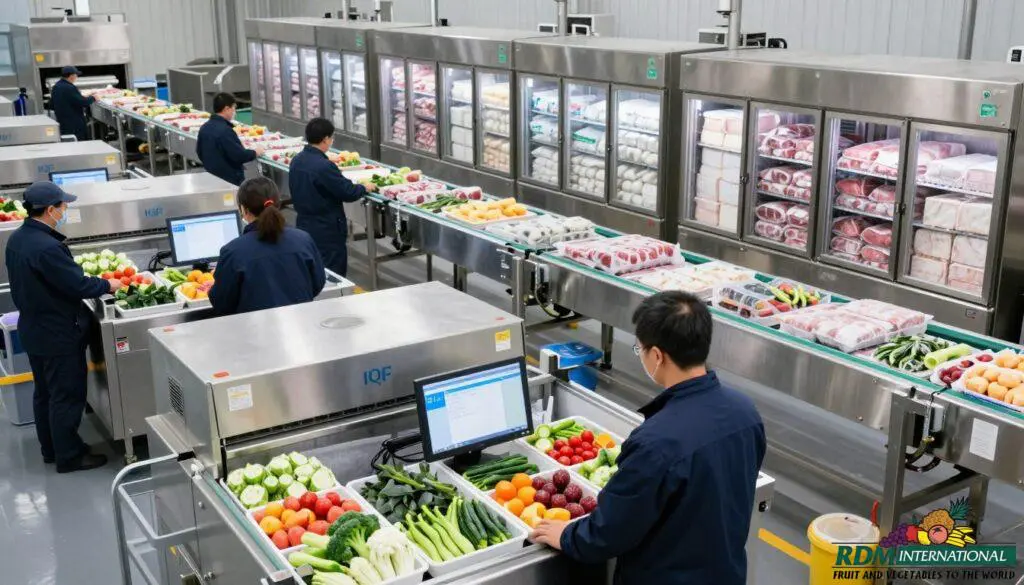
The Advantage of Thawing Only What You Need
IQF technology lets you thaw only what you need. This is different from block-frozen items that require thawing the whole mass. IQF helps with precise inventory management.
This precise control cuts down on food waste. Thawing only what you need means you don’t waste partially thawed ingredients.
Variations in Processing Thaw Times
Time is crucial in any factory. Block-frozen products take a long time to thaw. They need a lot of energy to make sure they’re thawed evenly.
IQF products thaw quickly and evenly. This speed keeps your frozen food processing line running smoothly. It prevents delays caused by thawing big blocks.
| Feature | Block Frozen | IQF Frozen |
|---|---|---|
| Thaw Flexibility | Low (All or nothing) | High (Portion control) |
| Thaw Speed | Slow and uneven | Fast and uniform |
| Waste Potential | High | Minimal |
| Operational Impact | Requires planning | Highly responsive |
Labor Costs and Handling Requirements
Manual labor can really eat into your profits in food production. The cost of raw materials is just the start. The hidden costs of handling can quickly cut into your profit margins. Choosing the right freezing method is a key decision that affects your whole team.
Manual Labor Demands in Block Processing
Block freezing often needs a lot of manual work. Your team has to move, break, or thaw heavy blocks before they can be used. This is not only time-consuming but also risky for your staff.
Because these blocks are dense, they need special equipment or more time to thaw. This creates a bottleneck. It forces you to use more labor hours for simple tasks. Reducing these manual touchpoints is key to keeping your facility efficient.
“Efficiency is doing things right; effectiveness is doing the right things. In food manufacturing, choosing the right process is the ultimate form of efficiency.”
Streamlining Production Lines with IQF
IQF technology changes everything by allowing for precise, automated portioning. Since each piece is frozen separately, your team can easily pour or convey it into mixers or packaging lines. This eliminates the need for heavy lifting and manual breakdown of frozen masses.
By using IQF, you can focus your team on quality control and machine management. This makes your workflow smoother and lets your production line run faster. The table below shows how IQF reduces labor intensity compared to block freezing.
| Feature | Block Frozen | IQF |
|---|---|---|
| Handling Effort | High (Manual) | Low (Automated) |
| Prep Time | Extended | Immediate |
| Safety Risk | Higher | Minimal |
| Labor Cost | Higher | Optimized |
Investing in IQF technology is a smart move. It reduces the physical burden on your employees, improving morale and consistency. A streamlined line is a more profitable line.
Storage Space Optimization and Logistics
Optimizing storage space is more than just stacking pallets. It’s about choosing the right freezing method for your workflow. You need to balance the space your inventory takes up against how fast you need to move goods. The right frozen food packaging strategy can help you use your cold storage space better.
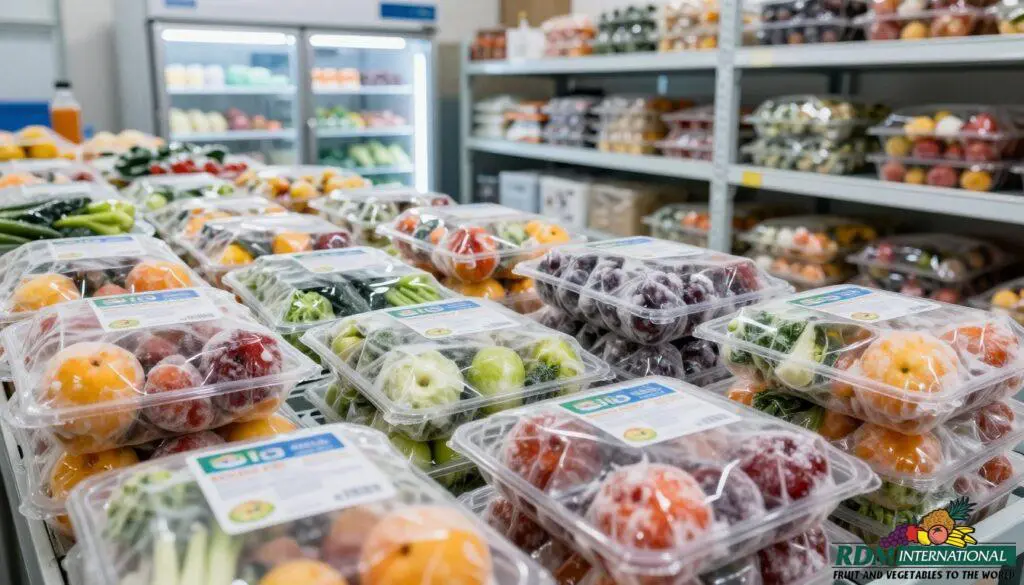
Maximizing Warehouse Density
Block freezing is great for saving space. It freezes products into a solid mass, filling every cubic foot of your warehouse. This compact footprint is perfect if you want to store the most product in the least space.
On the other hand, IQF needs more space because it freezes items individually. But, new frozen food packaging solutions help. They use stackable containers to make the most of vertical space, even with IQF items.
Handling and Transport Logistics for Large Batches
Handling large batches shows the trade-offs. Block-frozen items are heavy and hard to move, needing special equipment. This makes transport more complex and increases damage risk.
IQF items are easier to handle and transport. They don’t need thawing, making them quicker to move from storage to production. This streamlined handling saves labor and speeds up the process.
| Feature | Block Freezing | IQF Processing |
|---|---|---|
| Warehouse Density | High (Solid mass) | Moderate (Requires smart packaging) |
| Handling Ease | Low (Requires heavy equipment) | High (Ready for immediate use) |
| Logistical Cost | Lower storage, higher labor | Higher storage, lower labor |
| Packaging Needs | Basic bulk liners | Advanced frozen food packaging |
Your choice should match your needs. If you need to distribute quickly, IQF’s benefits might outweigh storage costs. But, if you store for a long time, block freezing could be better for you.
Waste Reduction Strategies in Modern Manufacturing
Adopting smarter freezing strategies can greatly improve your bottom line. In the competitive frozen food industry, every gram of product matters. It affects your profitability and sustainability goals.
Modern manufacturing needs a move away from old methods that cause unnecessary spoilage. By focusing on precision, you use resources well. This keeps your standards high for your customers.
Minimizing Product Loss During Thawing
One big challenge in food processing is the loss when thawing large batches. Traditional block freezing forces you to thaw more than needed for a run.
This excess leads to unnecessary waste and quality issues. IQF technology lets you portion out exactly what’s needed. This prevents over-thawing and keeps raw materials in top condition until use.
Inventory Management and Shelf-Life Extension
Good inventory management is key to success. IQF products offer flexibility, letting you rotate stock based on demand. This flexibility is better than rigid batch schedules.
This approach extends shelf life by freezing items until use. It reduces bacterial growth and texture loss risks. This saves money and boosts your reputation in the frozen food industry.
| Feature | Block Frozen | IQF Technology |
|---|---|---|
| Thaw Precision | Low (All or nothing) | High (Portion control) |
| Waste Potential | High due to excess | Minimal |
| Packaging Impact | Standard frozen food packaging | Optimized for efficiency |
| Shelf-Life Control | Limited | Excellent |
Quality Control and Consistency Standards
Modern food manufacturing techniques need strict quality control and batch consistency. At a large scale, small freezing process changes can cause big product differences. Standardizing your operations ensures every product meets high standards.
Ensuring Uniformity Across Large Batches
Uniformity is easier with advanced food manufacturing techniques like Individually Quick Frozen (IQF) technology. IQF treats each food piece as an individual, unlike block freezing. This prevents uneven freezing and damage to food cells.
Consistent freezing means your product is always the same. This makes quality checks easier and lets your team focus on improving production. This consistency is key for efficient food manufacturing techniques that grow with your business.
Meeting Consumer Expectations for Freshness
Today’s consumers want freshness that’s almost like farm-to-table quality. To meet this demand, your products must look and taste fresh after thawing. IQF technology helps by preserving these qualities right away.
Keeping your buyers happy means always delivering top-quality products. This builds trust and makes you a reliable partner in the global market. The table below shows how different factors affect your quality control strategy.
| Metric | IQF Processing | Block Freezing |
|---|---|---|
| Texture Retention | High (Cellular integrity) | Low (Cellular damage) |
| Uniformity | Excellent | Variable |
| Thaw Quality | Fresh-like | Soft/Mushy |
| Market Appeal | Premium | Commodity |
RDM International Perspective on Scalability
Entering the world of large-scale food manufacturing is not just about having big machines. It’s about having a clear plan. At RDM International, we believe your growth depends on how well you use new processing solutions. Success in this field is not just luck. It’s about making smart choices that focus on efficiency and quality.
Strategic Implementation for Food Manufacturers
Modern food manufacturing techniques show a clear move towards automation. Adding new tech should be done step by step to keep production running smoothly. First, check how fast you’re currently producing and find any slow spots before changing everything.
Here are key steps for a smooth transition:
- Do a detailed check of your energy use and waste.
- Choose modular equipment that lets you grow bit by bit.
- Make sure your team knows how to use the new iqf technology well.
- Set clear quality standards that match your new production speed.
Future-Proofing Your Production Line
To stay strong in the future, your factory needs to be ready for changes. Using old methods can make you weak against changes in the market and higher labor costs. By investing in flexible iqf technology, you make sure your line can handle different products without needing expensive changes all the time.
Future-proofing means building a system that grows with your business. Choosing equipment that’s very versatile helps protect your investment from the unpredictable global market. Strategic foresight today means a stronger and more profitable business tomorrow.
Conclusion
Choosing between IQF and block freezing is a big decision for your factory. It affects how you stand in the market and how well you work in the long run.
Block freezing is good for those who don’t want to spend a lot at first. It’s okay if the product’s texture isn’t the top priority. It’s great for big batches of ingredients that get turned into things like purees or sauces.
IQF technology is for brands aiming high. It gives you better product quality and less waste. This means you can make more money because your customers want the best.
Think about what you want to achieve and what your customers need. Picking the right freezing method helps you stay ahead in a quick-changing world. You can make your production line better for bigger results.
Look at how much you need to make and how much space you have. Making the right choice now helps you succeed in the changing food world. Talk to experts to see how these technologies fit your place.
FAQ
What is the primary technical difference when comparing IQF vs. block frozen methods?
IQF (Individually Quick Frozen) freezes each piece of food separately. This prevents them from sticking together. Block freezing, however, freezes the product into a solid mass.
For large-scale food manufacturing, IQF is more flexible. It allows for easier portioning and further processing.
How does the choice of freezing method affect production speed in the frozen food industry?
IQF is faster, especially in high-volume environments. It supports a continuous flow of product. Block freezing, being batch-based, can slow down production.
IQF helps you scale your operations as your business grows. It streamlines your line for better efficiency.
Why is IQF considered better for maintaining food texture and quality?
IQF freezes items quickly, forming tiny ice crystals. This preserves the fruit’s cell structure. Block freezing, with its slower cooling, forms larger ice crystals.
These larger crystals can damage the cells, leading to a loss of texture and moisture when thawed.
Can switching to IQF help reduce labor costs in my facility?
Yes, it can. Block freezing requires manual labor to break apart frozen masses. IQF automates handling, reducing labor needs and costs.
How do these two methods impact frozen food packaging and logistics?
Block freezing is compact but lacks the convenience of IQF. IQF offers diverse packaging options, like resealable bags. This improves inventory management and customer experience.
What are the advantages of IQF when it comes to thawing and waste reduction?
IQF allows you to thaw only what you need. Unlike block frozen goods, which must be thawed in bulk. This reduces waste and improves inventory management.
What does RDM International suggest for maintaining quality control across large batches?
RDM International says consistency is crucial. IQF technology ensures every piece meets high quality standards. This uniformity is key for competing in premium markets.
Is IQF technology a better long-term investment for large-scale food manufacturing?
Most experts agree it is. IQF offers versatility for meeting changing consumer demands. Investing in IQF technology prepares you for future market shifts and keeps your operation efficient and sustainable.