


Ever thought if your food preservation method is the best? In the US market, picking the right cooling method can really help your profits.
Knowing the differences between freezing method iqf vs. block frozen food processing is key for any facility manager. One method cools food fast, while the other saves space for storing more.
By looking at these two main ways, you can make informed decisions that boost your product’s quality. This guide helps you see how each fits your supply chain goals for lasting success.
Key Takeaways
- Individual cooling keeps food’s texture and nutrients better than bulk methods.
- Bulk storage is cheaper for lots of low-value ingredients.
- Your choice affects how efficient your facility is, based on its layout and how much it can handle.
- Picking the right tech cuts down on waste and makes managing your stock better.
- Choosing the right cooling method can give you a big edge over your competitors.
Understanding the Fundamentals of Frozen Food Processing Methods
In modern food making, two main methods are key. Choosing the right frozen food processing methods is crucial. It affects your product’s quality and how efficiently you work.
Understanding these systems helps you meet your customers’ needs better.
What is Individual Quick Freezing (IQF)?
Individual Quick Freezing, or IQF, freezes items fast and separately. It uses very cold temperatures, between -30°C and -40°C. This way, each piece freezes quickly before it can stick together.
This method is great for businesses that value convenience and portion control.
Because freezing is so fast, big ice crystals don’t form. This preserves the cellular structure of your food. You get a high-quality product that stays fresh for months.
The Traditional Approach to Block Frozen Food Production
Block frozen food production uses a slower cooling process. It’s often chosen for storing raw materials in bulk. It’s a cost-effective way to handle large amounts of inventory.
Products are packed into containers and cooled slowly. This method is slower than IQF but keeps bulk goods stable and consistent. Many still use it to keep a steady supply chain for further processing.
IQF vs. Block Frozen Food Processing: A Comparative Analysis
Ever wondered how fast freezing affects your food’s quality? Iqf vs. block frozen food processing shows a big difference. It’s all about how fast you cool down the food. Quick freezing keeps it fresh-like after thawing.
Key Differences in Freezing Speed and Temperature
The differences between iqf and block frozen come from how heat is transferred. Block freezing packs food together, slowing cooling. This keeps the center warm for a long time.
IQF, on the other hand, freezes each piece separately. This fast freezing is key to stopping big ice crystals from damaging the food’s cells.
Impact on Product Texture and Quality
Choosing a freezing method affects your food’s texture. Slow freezing in blocks can cause big ice crystals. These crystals hurt the cells, leading to drip loss and a soft texture when thawed.
IQF, however, keeps food’s natural structure intact. Its fast freezing means tiny ice crystals. This helps your food stay firm, colorful, and nutritious even after storage.
| Feature | IQF Processing | Block Frozen |
|---|---|---|
| Freezing Speed | Very Rapid | Slow |
| Ice Crystal Size | Microscopic | Large/Damaging |
| Product Quality | High/Near-Fresh | Variable/Soft |
| Drip Loss | Minimal | Significant |
This comparison of iqf and block frozen shows why speed matters. Quick freezing means better food quality for your customers.
Optimizing Your Production Floor Efficiencies with RDM International
To reach top performance on your production floor, examine how your equipment affects your daily output. At RDM International, we help you find and fix hidden gaps in your setup. By using the latest frozen food industry technologies, you can turn your facility into a high-output place. This place will waste less and work faster.
Streamlining Workflow Through Advanced Freezing Technology
Old methods use manual labor and slow cooling, slowing down your work. Moving to advanced systems makes your production more agile and quick to change. A smooth workflow means your team can focus on quality, not just getting things done.
“Efficiency is doing things right; effectiveness is doing the right things.”
Upgrading means leaving behind slow, old ways. Your space will work better with new, fast machines. This change is key for any business wanting to keep up in today’s fast market.
Reducing Operational Bottlenecks in Your Facility
Bottlenecks hurt profits in food processing. They happen when old equipment can’t keep up with new needs. Using the latest frozen food industry technologies helps you overcome these problems and keep goods moving smoothly.
Look at your line to find where products slow down or need extra help. Often, the answer is to automate slow, manual steps. This keeps your output steady, making sure your facility works its best every day.
| Feature | Traditional Lines | Modern RDM Solutions |
|---|---|---|
| Processing Speed | Slow/Batch-based | High-speed/Continuous |
| Labor Intensity | High manual input | Automated/Low touch |
| Floor Space | Large footprint | Optimized/Compact |
The Economic Advantages of IQF Technology
Smart business owners see the benefits of iqf processing right away. They move away from old methods to control their speed and resources better. This lets their team focus on important tasks, not just manual work.
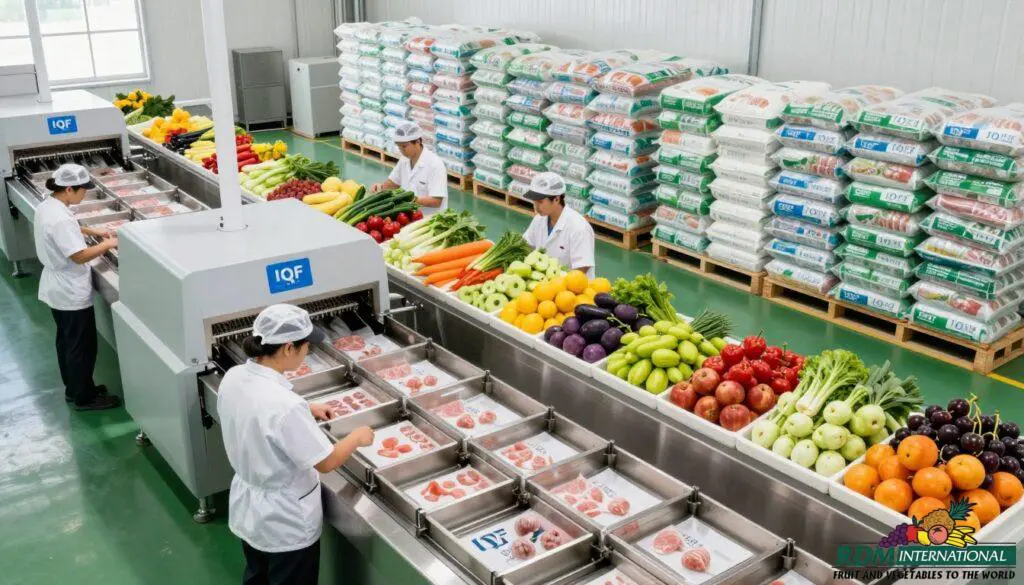
How IQF Saves Labor Handling Hours
One big iqf technology advantage is having a product that flows easily. Unlike solid blocks, IQF items are ready to use right away. Your team can just pour the right amount for packaging or cooking.
This method skips the need for tempering or thawing. The product stays loose, avoiding the risks and strain of handling big, frozen blocks. Your work flow gets smoother, faster, and more predictable.
“Efficiency is not just about speed; it is about removing the unnecessary steps that drain your resources and limit your growth potential.”
Calculating Long-Term Cost Savings for Your Business
Looking at your costs, block freezing’s labor needs can hide big expenses. You spend time moving, breaking, and waiting for blocks to thaw. Switching to IQF saves those hours and turns them into measurable profit.
Here’s a look at how labor needs differ between the two methods:
| Process Step | Block Frozen | IQF Technology |
|---|---|---|
| Preparation | High (Manual Breaking) | None (Ready to Use) |
| Thawing Time | Long (Hours/Days) | Immediate |
| Labor Intensity | High | Low |
| Waste Potential | High | Minimal |
Looking at these numbers shows the benefits of iqf processing last long after the initial cost. You cut overhead by reducing waste and making the most of every employee. By using these iqf technology advantages, your business stays ahead in a tough market.
Preserving Food Integrity and Micro-Structures
The secret to high-quality frozen produce is in the tiny details of freezing. Using iqf food preservation techniques locks in the natural state of the fruit. This keeps your products perfect from freezer to plate.
Preventing Large Ice Crystal Punctures in Fruit
Slow freezing can cause big, sharp ice crystals in fruit. These crystals hurt the fruit’s cells, making it lose juice when thawed. But, quick freezing makes small, even crystals that don’t harm the fruit.
“Quality in the frozen food industry is not just about temperature; it is about the speed at which you can bypass the zone of maximum crystal formation.“
Using iqf food preservation techniques helps freeze fast. This keeps the fruit’s shape and firmness. It’s a big win for businesses aiming for a premium experience like fresh produce.
Maintaining Nutritional Value and Visual Appeal
Freezing affects the health and look of your food. Quick freezing:
- Keeps important vitamins and minerals from being lost.
- Preserves the vibrant colors that make fruit attractive.
- Prevents clumping, making it easier to handle and portion.
By focusing on these iqf food preservation techniques, you boost your brand’s reputation. Customers see the quality difference, leading to more sales and loyalty. Keeping the fruit’s micro-structure intact is key to standing out in the market.
Waste Reduction Strategies Through Partial Thawing
Changing how you handle frozen food can make your kitchen more efficient. Being able to use only what you need saves money. This approach lets you manage supplies more precisely.
The Flexibility of IQF for Portion Control
Individual Quick Freezing (IQF) technology is a big plus. It freezes items separately, not together. This means you can grab just the right amount of food for your dish.
With IQF, you can measure your portions before cooking. This keeps your prep work consistent. It also saves time by avoiding the need to chop or separate thawed food.
Eliminating Food Waste in Commercial Kitchens
Using IQF greatly reduces food waste. You only thaw what you plan to serve. This cuts down on waste and saves money.
These strategies make your kitchen run better and support the environment. They show you care about using resources wisely. Precise portion control is key to a successful kitchen.
Comparing Energy Consumption and Sustainability
Have you thought about how your freezing tech choice affects your energy bill and the planet? Today’s food processing plants focus on making quality food while saving energy. By checking your current systems, you can make choices that save money and help the environment.
Energy Efficiency in Modern Freezing Systems
Modern Individual Quick Freezing (IQF) systems are more energy-efficient than before. Older methods wasted energy by cooling too much air or not managing heat well. Now, new tech uses optimized airflow and better insulation to freeze your product directly.
This means you can freeze food faster without using more electricity. By freezing faster, you use less energy overall. Modern freezing systems adjust energy use based on how much you produce.
Environmental Impact of Your Processing Choices
Your choices affect your facility’s environmental impact and sustainability goals. Choosing energy-saving equipment cuts down on greenhouse gas emissions. This choice is good for the planet and makes your brand look responsible.
Buying sustainable tech can save you money in the long run. Systems that waste less and use more energy are better for your business. Making these choices now helps your facility stay competitive and green for years.
Selecting the Right Freezing Method for Your Product Line
Choosing the right freezing method is crucial for any food business. It affects your current and future production. By matching your technology to your goals, you keep your brand known for superior quality.

Factors to Consider When Scaling Your Operations
As you grow, balance speed and handling needs. Big facilities need automated systems for fast, consistent output. But, fragile products might need gentle handling over speed.
Think about your space and energy costs. Scaling up means planning for space and energy use now to avoid costly changes later.
Matching Technology to Your Specific Food Categories
Food items freeze differently. Delicate berries need methods that prevent clumping. But, bulk items like meat patties might do better with traditional methods.
The table below helps match your products with the best freezing method for your business.
| Product Category | Primary Need | Recommended Method |
|---|---|---|
| Small Fruits & Berries | Individual separation | IQF Technology |
| Prepared Entrees | Structural integrity | Blast Freezing |
| Bulk Meat Cuts | Space efficiency | Block Freezing |
| Diced Vegetables | Rapid cooling | IQF Technology |
Your choice should reflect your company’s long-term vision. Analyze your food types to pick a system that meets your needs now and in the future. The right technology today ensures consistent excellence for your customers.
Conclusion
Choosing the right way to freeze is key to success. You have two main options: individual quick freezing and block freezing. Each method affects the quality of your product and how efficiently you work.
RDM International can help you upgrade your freezing technology. By adding new tech to your lines, you can offer better products. This meets the high standards of today’s consumers who want great taste and nutrition.
Review your current process to find ways to improve. Making these changes can cut down on waste and save energy. Contact RDM International to begin your journey to a more efficient and green future.
FAQ
What are the primary differences between IQF and block frozen methods?
IQF and block frozen methods differ in how fast they freeze and how they treat the product. IQF freezes items separately at very low temperatures, preventing them from sticking. Block frozen food is frozen in large masses, which is good for storing but harder to process later.
Why is rapid cooling considered a major advantage in a comparison of IQF and block frozen techniques?
Rapid cooling is key because it affects the quality of your product. Faster freezing means smaller ice crystals, which helps keep food’s texture and structure when thawed. This is especially important for delicate items like seafood or summer berries.
How does RDM International help streamline frozen food industry technologies on the production floor?
RDM International helps by analyzing your production floor to find slow spots. They help you use the latest technologies to make your process faster and more flexible. This makes your facility more agile and ready for changing market needs.
What are the specific economic benefits of IQF processing regarding labor?
IQF processing saves a lot of labor hours. The product is free-flowing, so your team doesn’t have to break apart solid blocks. This saves money in the long run and lets you package or use the product right away.
How do IQF food preservation techniques protect the micro-structures of fruit?
IQF techniques prevent ice crystals from damaging fruit’s cells. Freezing fruit quickly helps it keep its look, juiciness, and nutrients. This is great for making products that look and taste like fresh fruit.
How does the flexibility of IQF help in eliminating food waste?
IQF lets you thaw only what you need, unlike block-frozen products. This means you can control portions better in commercial kitchens. It helps reduce waste, saving money and supporting sustainable kitchens.
Which of these frozen food processing methods is better for facility sustainability?
Modern IQF systems are more energy-efficient than older methods. They use less energy and are more precise. This makes them better for the environment and helps meet sustainability goals.
What factors should you consider when choosing the right freezing method for your product line?
The right method depends on your food types and growth plans. You need to balance volume and delicate handling. IQF is best for high-value items, while block freezing is for bulk raw materials.