


Ever noticed how some berries spill out of a bag, while others come as a solid block? This simple question points to a major choice for your kitchen or business. Knowing how these items are frozen helps you choose the right ingredients. Discover IQF fruit vs frozen blocks: critical differences.
This iqf technology overview shows how each piece of produce is frozen quickly and separately. This method, called Individual Quick Freezing, is key for keeping items like blueberries fresh. The fast freezing helps keep the texture of the produce perfect from farm to table.
When comparing iqf and frozen fruit blocks, the importance of product consistency is clear. You can grab just what you need without thawing a big block. These small changes in freezing make a big difference in your favorite dishes.
Key Takeaways
- Individual pieces stay separate for easy pouring and measuring.
- Rapid chilling protects the natural shape and cell structure of the produce.
- You can use small portions at a time without thawing the entire package.
- High product consistency ensures reliable results for commercial baking.
- Modern flash-freezing methods lock in vitamins and peak flavor efficiently.
- This technology is the best choice for delicate items that crush easily.
What Is IQF Fruit and How Does It Work?
Discover IQF fruit vs frozen blocks: critical differences. Individual Quick Freezing, or IQF, is a top choice for keeping fruit fresh. It’s better than old-school freezing methods in many ways.
The IQF method is detailed and involves several steps. First, the fruit is cooled down to remove any heat from the field. Then, each piece is frozen separately to keep them distinct.
The IQF Freezing Process Explained
Discover IQF fruit vs frozen blocks: critical differences. The heart of IQF is its fast freezing. Fruit is frozen quickly at very low temperatures, between -30°C to -40°C. This fast freezing is key because it stops big ice crystals from harming the fruit’s cells.
- Pre-cooling to remove field heat
- Individual separation of fruit pieces
- Blast freezing at -30°C to -40°C
- Quality check to ensure preservation standards
- Packaging in airtight containers or bags
- Storage at -18°C or below to maintain quality
How Individual Quick Freezing Preserves Fruit Quality
Discover IQF fruit vs frozen blocks: critical differences. IQF is great at keeping fruit’s natural look, taste, and nutrients. It freezes fruit fast and separately to avoid damage from ice crystals and sticking.
This method helps keep the fruit’s natural texture and flavor. The result is fruit that looks good and tastes like it’s just picked.
For businesses, IQF fruit means top-notch quality and consistency. It’s perfect for food makers, chefs, and retailers. IQF fruit is a reliable choice for many uses.
Understanding Frozen Fruit Blocks
Discover IQF fruit vs frozen blocks: critical differences. Frozen fruit blocks are different from Individual Quick Freezing (IQF). They are made by freezing fruit in large blocks. This can change their texture and how they are used.
This traditional method is used a lot in the food industry to keep fruits fresh. But, it has its own good and bad points.
Traditional Block Freezing Methods
Discover IQF fruit vs frozen blocks: critical differences. Block freezing puts fruit into big containers or molds and freezes them together. It’s often picked for being cost-effective and easy. But, the fruit can stick together, making it hard to use.
This method might not be as precise as IQF. The bigger blocks freeze slower. This can mess with the fruit’s texture and keep its nutrients.
How Frozen Blocks Are Produced and Stored
Discover IQF fruit vs frozen blocks: critical differences. Making frozen fruit blocks starts with picking and getting ready the fruit. Then, the fruit is put into containers or molds. These are frozen quickly to keep the fruit’s texture good.
After freezing, the blocks go into cold storage at very low temperatures. Keeping them at a consistent freezer temperature below -18°C (0°F) is key. This helps keep the fruit fresh for a long time.
Frozen fruit blocks and IQF fruit are different. IQF keeps each fruit piece separate. But, frozen blocks have fruit stuck together. This is important to think about when deciding what to use for your business.
IQF Fruit vs Frozen Blocks: Critical Differences
Discover IQF fruit vs frozen blocks: critical differences. IQF fruit and frozen blocks have key differences that affect their quality and use. These differences come from how they are processed and what they look like after freezing.
Key Distinctions in Processing Methods
Discover IQF fruit vs frozen blocks: critical differences. IQF fruit is frozen one piece at a time. This quick freezing keeps the fruit’s texture and shape. It uses cold air or liquid nitrogen to freeze the fruit fast.
Frozen blocks, however, are made by freezing fruit together in big blocks. This method freezes the fruit slowly, which can damage its texture and structure.
“The IQF method ensures that each piece of fruit is frozen separately, maintaining its original texture and flavor.”
Here’s a quick comparison of the two methods:
| Processing Characteristics | IQF Fruit | Frozen Blocks |
|---|---|---|
| Freezing Method | Individual Quick Freezing | Block Freezing |
| Freezing Time | Rapid, within minutes | Slower, varies by block size |
| Texture Preservation | Excellent, maintains natural texture | Variable, can suffer texture degradation |
Structural and Physical Differences
The way IQF fruit and frozen blocks are made affects their look and feel. IQF fruit stays loose and easy to use. Frozen blocks, being solid, need to be thawed and broken down before use.
- Individual pieces vs. solid block
- Better texture retention in IQF fruit
- Easier handling and portioning with IQF fruit
Knowing these differences helps businesses pick the right frozen fruit for their needs.
Texture Retention: Why It Matters for Your Products
Discover IQF fruit vs frozen blocks: critical differences. Texture retention is key when picking between IQF fruit and frozen blocks for your business. The texture of frozen fruit greatly affects your product’s quality and appeal. This is true for smoothies, desserts, or dishes.
Customers want high-quality products with natural texture and flavor. So, keeping the fruit’s texture right is vital for keeping customers happy and loyal.
How IQF Preserves Natural Fruit Texture
Discover IQF fruit vs frozen blocks: critical differences. IQF (Individual Quick Freezing) keeps the fruit’s natural texture by forming small ice crystals. This method keeps the fruit’s cells intact. So, the fruit stays the same after thawing.
The IQF process freezes fruit quickly, stopping big ice crystals from damaging the fruit. This way, IQF fruit keeps its natural texture, perfect for many uses.
Texture Changes in Frozen Block Methods
Discover IQF fruit vs frozen blocks: critical differences. Frozen block methods freeze fruit in big blocks, leading to bigger ice crystals. These crystals can harm the fruit’s cells, making it softer or mushier after thawing.
The texture changes in frozen block methods can be big, affecting your product’s quality. But, some uses might not mind these changes as much.
| Freezing Method | Texture Retention | Typical Applications |
|---|---|---|
| IQF | High | High-end desserts, smoothies, and culinary dishes |
| Frozen Blocks | Lower | Juice production, cooking, and industrial baking |
Product Consistency and Quality Control
Discover IQF fruit vs frozen blocks: critical differences. Product consistency is key in the food world, and IQF fruit shines here. It’s all about meeting quality standards to keep customers happy and coming back.
IQF fruit stands out because it’s frozen individually. This keeps each piece’s natural texture and taste. It’s perfect for where looks and feel matter a lot.
Uniformity in IQF Fruit Products
Discover IQF fruit vs frozen blocks: critical differences. IQF fruit is known for being the same in size, texture, and quality. The quick freezing method keeps the fruit’s natural traits. This makes IQF fruit great for baking and smoothies.
Key benefits of IQF fruit uniformity include:
- Easier portion control and measurement
- Improved texture and appearance in final products
- Simplified recipe formulation
Consistency Challenges with Frozen Blocks
Discover IQF fruit vs frozen blocks: critical differences. Frozen blocks can be tricky to keep consistent. The block freezing method might cause clumps and uneven freezing. This can mess up the texture and quality of your products.
The challenges associated with frozen blocks include:
- Potential for clumping and uneven freezing
- Variability in texture and quality
- Difficulty in achieving consistent flavor profiles
Impact on Your Final Product Quality
Discover IQF fruit vs frozen blocks: critical differences. The quality of your ingredients affects your final product. IQF fruit ensures quality and consistency, making your products taste better and look more appealing. Frozen blocks, however, can lead to inconsistent products, which might upset your customers.
Choosing IQF fruit means you can keep your products top-notch. This boosts customer satisfaction and loyalty.
Advantages of IQF Fruit for Your Business
Discover IQF fruit vs frozen blocks: critical differences. Choosing the right freezing method is crucial for your business. IQF fruit brings many benefits that can change the game. It improves product quality, boosts flexibility, and cuts down on waste.
Flexibility in Portioning and Usage
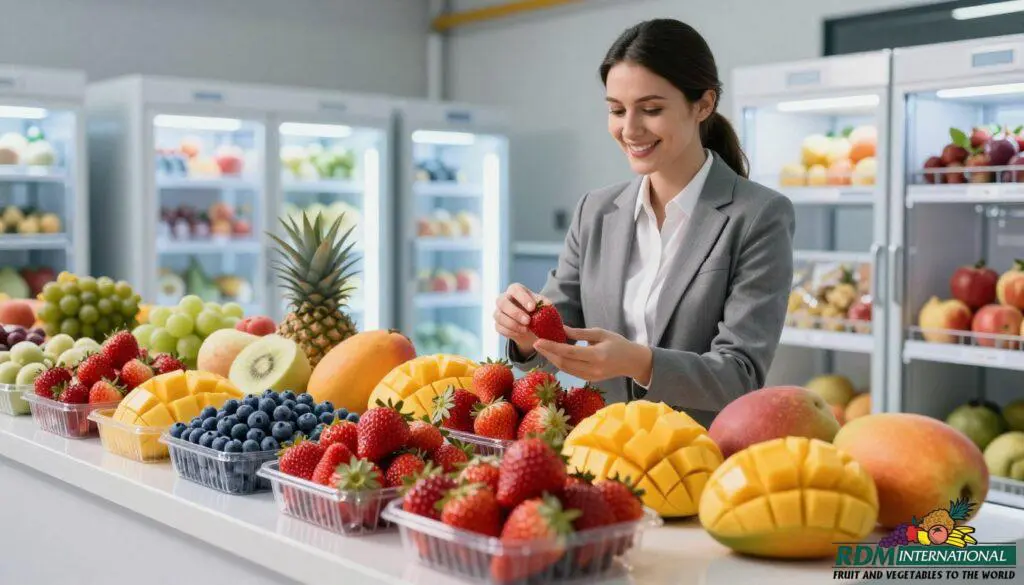
Discover IQF fruit vs frozen blocks: critical differences. IQF fruit stands out because of its flexibility. It’s frozen individually, so you can use just what you need. This flexibility in portioning lets you make a variety of products, from smoothies to baked goods.
For instance, you can make seasonal or limited-edition products without big batches. This flexibility helps you quickly adapt to changing consumer tastes.
Extended Shelf Life Benefits
Discover IQF fruit vs frozen blocks: critical differences. IQF fruit has a longer shelf life than traditional methods. Its natural texture and flavor are preserved, lasting longer. This means you can keep a steady supply of quality fruit all year, no matter the season.
| Freezing Method | Shelf Life | Texture Retention |
|---|---|---|
| IQF | Up to 24 months | Excellent |
| Traditional Block Freezing | Up to 12 months | Good |
Reduced Waste and Better Inventory Management
Discover IQF fruit vs frozen blocks: critical differences. IQF fruit also reduces waste and makes inventory management easier. You only use what you need, cutting down on waste. Plus, it’s simpler to keep track of your stock levels.
IQF technology offers many benefits for your business. It improves product quality, increases flexibility, and reduces waste. IQF fruit is a smart choice for businesses looking to enhance their frozen fruit offerings.
When Frozen Fruit Blocks Make Sense
Discover IQF fruit vs frozen blocks: critical differences. Frozen fruit blocks are a good choice in certain situations. They might be better than IQF fruit in some cases. It depends on what your operation needs and where block-frozen fruit shines.
Frozen fruit blocks are great for big operations where saving money matters. They cost less to make than IQF fruit. This is because they use simpler machines and can handle more at once.
Cost Considerations for Large-Scale Operations
Discover IQF fruit vs frozen blocks: critical differences. For big operations, frozen fruit blocks save money. They are cheaper to make and use less energy. Here’s how IQF fruit and frozen fruit blocks compare in cost:
| Cost Factor | IQF Fruit | Frozen Fruit Blocks |
|---|---|---|
| Initial Investment | Higher due to advanced machinery | Lower due to simpler equipment |
| Energy Consumption | Higher energy costs | Lower energy costs |
| Production Cost per Unit | Generally higher | Generally lower |
The table shows frozen fruit blocks are cheaper for big operations. This is because they cost less to start and use less energy.
Best Applications for Block-Frozen Fruit
Discover IQF fruit vs frozen blocks: critical differences. Frozen fruit blocks are perfect for uses where fruit is processed further. They’re great for making jams, purees, and smoothies. They’re also good in baked goods and desserts. The main benefit is they’re easy to store and move, making them handy for makers.
Some top uses for block-frozen fruit include:
- Juice and smoothie production
- Baking and dessert manufacturing
- Jam and puree production
- Yogurt and ice cream manufacturing
In summary, while IQF fruit has its perks, frozen fruit blocks are a cost-effective choice for big operations and specific uses. Knowing your needs and the benefits of each method helps you choose the best for your business.
Storage and Handling Requirements
Discover IQF fruit vs frozen blocks: critical differences. To keep your frozen fruit products fresh, it’s important to know how to store and handle them. Both IQF fruit and frozen blocks need careful attention to stay good and keep their nutrients.
IQF Fruit Storage Best Practices
Discover IQF fruit vs frozen blocks: critical differences. IQF fruit is easy to store because it’s frozen individually. To keep it fresh, put it in airtight containers or bags. This stops moisture and other tastes from getting in.
- Keep the storage area clean and dry to prevent contamination.
- Maintain a consistent freezer temperature at or below -18°C (0°F).
- Use FIFO (First-In, First-Out) inventory management to ensure older stock is used before it deteriorates.
Frozen Block Storage Considerations
Frozen fruit blocks are bigger and denser, so they need special care. It’s important to handle them gently to avoid damage and keep them frozen.
Key considerations include:
- Storing them in a freezer with a consistent temperature below -18°C.
- Avoiding stacking blocks too high, which can cause damage to the lower blocks.
- Ensuring the freezer is not overloaded, allowing for good air circulation around the blocks.
Temperature Control and Shelf Stability
Keeping the right temperature is crucial for both IQF fruit and frozen blocks. Changes in temperature can cause ice crystals to form, which can ruin the fruit’s texture and quality.
Maintaining a stable freezer temperature is key to keeping your frozen fruit products fresh. Check your freezer’s temperature often. You might want to get a backup system or alarm to alert you if the temperature changes.
By following these storage and handling tips, you can make sure your IQF fruit and frozen blocks stay in top shape. They’ll be ready to use in your products.
Cost Analysis: Investment vs. Long-Term Value
Understanding the total cost of owning IQF fruit and frozen blocks is key. It involves looking at both the initial costs and the long-term benefits. It’s important to see how each choice affects your business over time.
Initial Processing Costs Compared
IQF technology costs more at first than traditional block freezing. This is because IQF needs advanced machines to freeze each fruit piece individually. Yet, IQF keeps the fruit’s natural texture and quality, making the extra cost worth it.
Block freezing, on the other hand, uses cheaper equipment and simpler methods. But, it might lead to lower quality and less flexibility in the long run.
Operational Savings with Each Method
IQF fruit brings several savings that can balance out its higher start-up costs. For example, IQF products are easier to portion and use, cutting down on waste and labor. Also, you can use only what you need, improving inventory management and saving on storage.
- Reduced Waste: IQF fruit lets you use just the right amount, reducing waste.
- Better Inventory Management: IQF helps manage inventory better, as products keep quality longer.
- Lower Labor Costs: IQF’s ease of use means less time and money spent on fruit preparation.
Total Cost of Ownership for Your Operation
To truly understand the cost, you must look at both the start-up costs and ongoing expenses of each method. A detailed analysis will show which option is more cost-effective for your business.
As a business owner, making a smart choice means knowing these details well and how they fit with your goals.
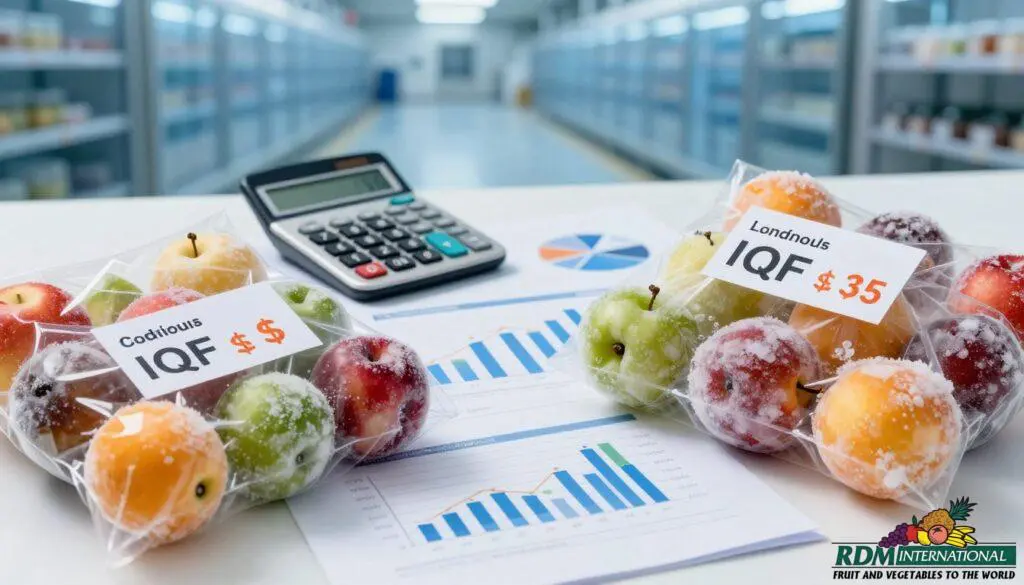
By examining the initial costs, savings, and total cost, you can choose wisely. This choice will help meet your business goals and improve your profits.
Applications in Food Service and Manufacturing
IQF fruit and frozen blocks are key in food service and manufacturing. They serve different needs and offer unique benefits. Knowing how they are used can help your business make better choices.
Commercial Kitchen Applications
In commercial kitchens, IQF fruit is a top choice. It’s easy to portion and of high quality. Chefs can use just what they need without thawing a whole block.
Flexibility is crucial in kitchens where menus change often. IQF fruit makes it easy to create many dishes quickly.
High-Volume Production Uses
For big production, frozen blocks are more affordable. They’re great for making lots of products. But, they need extra steps before use.
Frozen blocks save on packaging and storage for big orders. Yet, they’re not as flexible as IQF fruit.
| Product | Commercial Kitchens | High-Volume Production |
|---|---|---|
| IQF Fruit | Preferred for convenience and quality | Less economical for large quantities |
| Frozen Blocks | Limited by less flexibility in use | Ideal for cost-effective bulk processing |
Retail and Consumer Preferences
In retail, what people want affects sales of IQF fruit and frozen blocks. Many prefer IQF fruit for its ease and quality.
But, frozen blocks have fans too. They’re chosen by those who want to save money and process fruit at home.
Businesses can meet these needs by offering the right products. This way, they can better serve their customers.
Nutritional Value and Food Safety Considerations
It’s key to know how IQF and frozen block freezing affect your food’s nutritional value and safety. Each method impacts nutrient retention and microbial control differently.
Nutrient Preservation in IQF vs Block Freezing
IQF fruit’s quick freezing keeps its nutrients by avoiding ice crystal damage. This method is great for keeping vitamins and antioxidants in fruits.
Frozen blocks, frozen in bigger chunks, might see a bit less nutrient preservation due to slower freezing. But, with the right handling and storage, they can still keep a lot of their nutritional value.
Comparison of Nutrient Retention:
| Nutrient | IQF Fruit | Frozen Blocks |
|---|---|---|
| Vitamin C | High Retention | Moderate Retention |
| Antioxidants | High Retention | Moderate Retention |
| Fiber | High Retention | High Retention |
Food Safety Standards and Compliance
Both IQF fruit and frozen blocks must meet strict food safety standards. This includes following rules on microbial control, packaging, and storage.
“Food safety is not just a regulatory requirement; it’s a critical component of consumer trust and brand reputation.” – Food Safety Expert
Microbial Control in Different Freezing Methods
IQF and frozen block methods both freeze the fruit to stop microbial growth. But, IQF’s quicker freezing adds an extra safety layer by reducing contamination chances.
Knowing the differences in nutrient preservation and food safety between IQF fruit and frozen blocks helps you make better choices. This ensures you provide top-quality products to your customers.
Conclusion
Choosing between IQF fruit and frozen blocks is key to meeting your business needs. We’ve looked at how they are made, how they feel, and how consistent they are. This helps you see the differences clearly.
The right choice depends on your business, what you need, and how you want your products to be. IQF fruit is great for its flexibility and keeping texture, which is good for many uses. Frozen fruit blocks are cheaper for big orders and certain products.
Understanding the differences and uses of IQF fruit and frozen blocks helps you pick the best for your business. This ensures your products meet your quality standards.
FAQ
What are the iqf fruit vs frozen blocks: critical differences you should keep in mind for your business?
IQF (Individually Quick Frozen) freezes each fruit piece separately. This keeps its shape. Frozen blocks, however, freeze fruit in a solid mass.
IQF gives you pourable, ready-to-use fruit. Frozen blocks need thawing or breaking before use.
Can you provide an iqf technology overview and explain the specific iqf fruit processing techniques used?
Sure! IQF technology uses a cold air stream to freeze fruit quickly. It uses special conveyors like OctoFrost’s.
This method prevents ice crystals from forming. It locks in moisture and nutrients better than traditional freezing.
What are the primary iqf fruit benefits for commercial kitchens and food manufacturers?
IQF fruit offers great flexibility in portioning. You can take what you need without waste. This improves inventory management.
It also keeps the fruit’s texture, making your dishes look and taste great.
Are there any specific frozen fruit blocks advantages that might make them a better fit for my needs?
Yes, frozen fruit blocks are cost-effective for large-scale production. They’re ideal for making purees, juices, or jams. Brands like Dole offer them in bulk.
How should I compare iqf and frozen fruit blocks when it comes to long-term storage?
IQF fruit is more prone to clumping in temperature changes. Frozen blocks are less affected by temperature swings. But, keep both at -18°C (0°F) for best quality.
Is there a significant difference between iqf and frozen blocks regarding nutritional value?
The nutritional difference is small, but IQF might have a slight edge. IQF’s quick freezing preserves more vitamins and antioxidants. Frozen blocks can lose more nutrients during thawing.
Why is iqf vs traditional freezing methods a hot topic for quality control managers?
Quality managers prefer IQF for its uniformity. IQF freezes each fruit to the same standard. Frozen blocks can have inconsistent textures and microbial risks if not cooled perfectly.